Category Archives: Shoes

The Lost Footprints of Lima

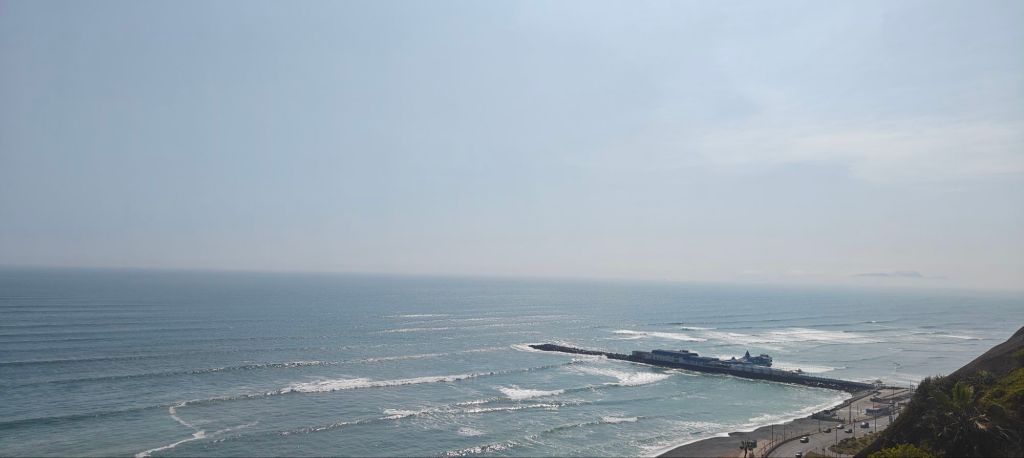
View of the Sea from the cliffs of Mira Flores

Lima is the capital of Peru. A city that everyone has to fly into to get to any and all of the country’s famous tourist sites. Fun fact: Peru is nine times the size of the UK, which gives you a sense of scale. I have only ever scratched the surface when it comes to what the South American contenent has to offer, rendering me anything but an expert so if you are after such knowledge then this may not be the place for you. That said, what I’m writing about doesn’t require you to leave Lima at all. Better yet, it is free. It is certainly not world-renowned like Machu Pichu or as historically significant as Sacsayhuamán, there is no kudos in seeing it, no bragging rights or boasting to your mates down the local boozer about it … the last of which would likely result in a few laughs on your behalf. Although noticing it is commendable or even noting it would speak volumes about your perceptive skills.
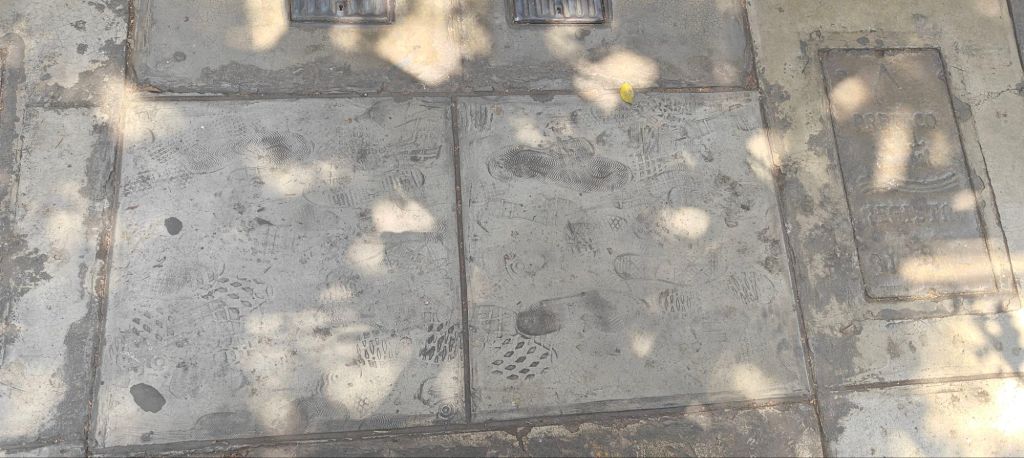
Walking around Lima, it is easy to get distracted by the architecture and distinct energy. For most, this will be your first chance to gather a sense of what Peru means to you, at least as far as city life is concerned. Lima’s pavements, sidewalks or la veredas are like any other city in so much as they get you from A to B. The concrete below your feet that interlinks the large metropolis feels like any other. It is hardly a tourist site in itself, a point I would hardly contest. However, if you’re fascinated by all things shoe-related then the streets of Lima might just be a fascinating space to you.
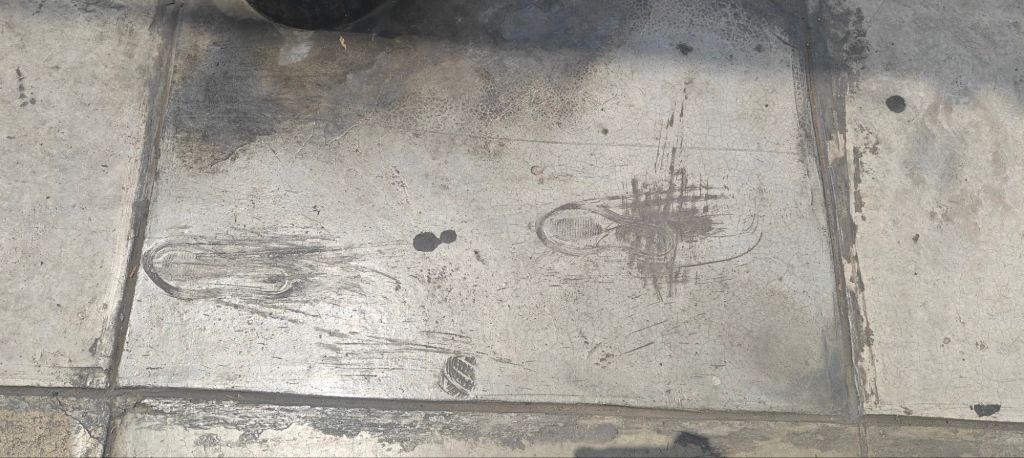
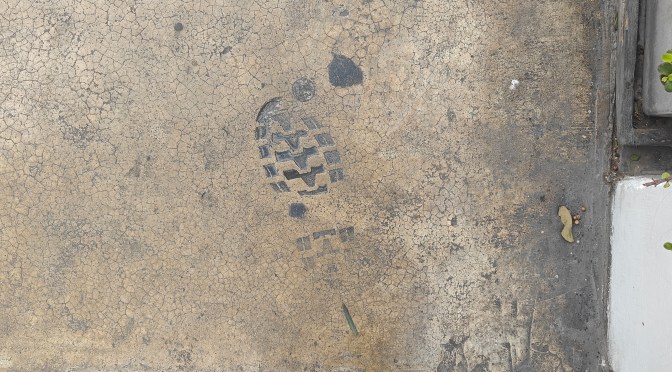
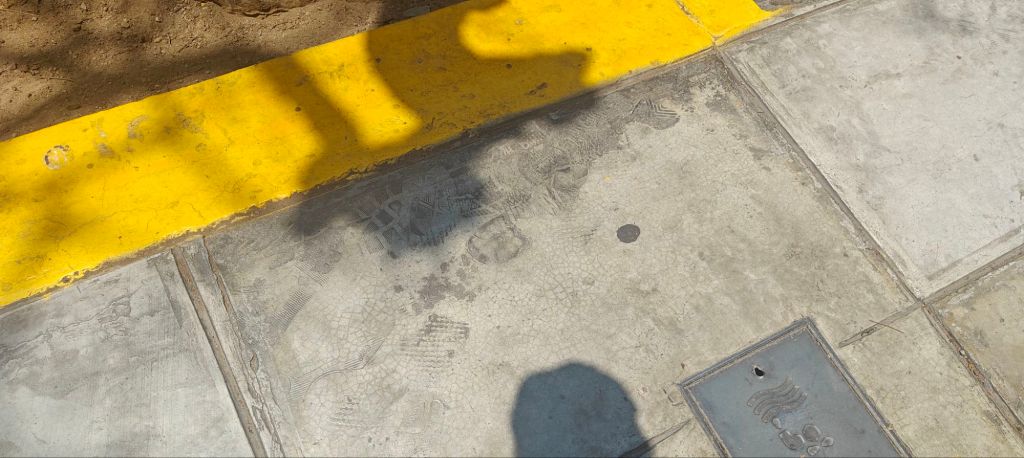
It had been over two years since I’d had the chance to wander its streets. A persistent mist and elderly men with white beards reading alone made up the mostly unexplored canvas of the city for me. Yet upon this visit, it was neither of those things that distracted me, instead, I found my gaze constantly drifting towards the ground below. Footprints pressed into the concrete pavement were frequent, no longer an accident or detail I could breeze past (pardon the pun). I’d never taken notice of this in any other city, a fact made even more noteworthy as I am someone who has a knack for spotting abandoned footwear (another project entirely). Why were there so many footprints dotted about?  What did this mean about Lima and the people who lived there?
Perhaps it was because London’s pavements were built from a different type of concrete, was it that simple? Or was it that the English were too polite? A stereotype of course and an outdated one as London is recognised as a global hub, making it a poor explanation. Maybe it was that the people of London were very adherent to the rules and regulations, the literal red tape that would often surround such a freshly paved sidewalk would clearly be enough of a deterrent … right?
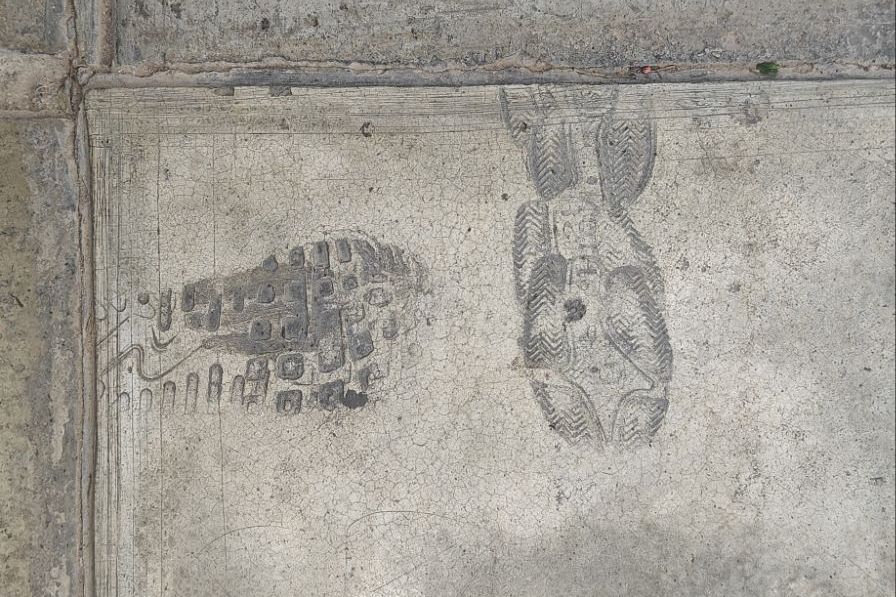
Could it be that the Peruvian government invested more in the public infrastructure? Pouring millions of dollars into the concrete sidewalks of Lima with many of the blocks sectioned off at a time and therefore increasing the chances of accidental footprints happening? This also seemed too simple but I admit there is certainly a logic in this hypothetical. Unlike London, Lima was less rainy which gives the Peruvian people more of a chance to lay fresh concrete … although I think I just made that up.
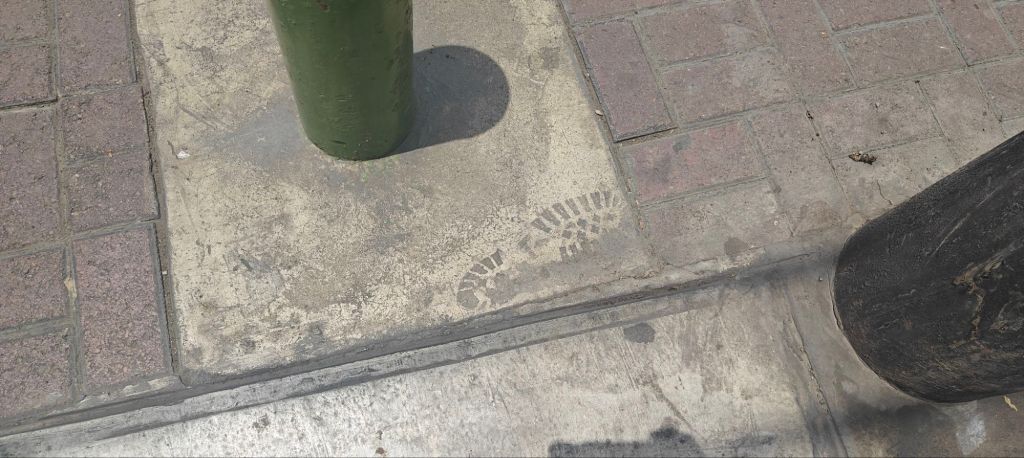
Was it that Peruvian people, more specifically the Peruvians of Lima, were impatient and therefore more likely to cut corners while traversing the city. Is it just part of the city mindset or grindset? Yet London is a very dog-eat-dog place that has less footprint-covered walkways (this statement is obviously anecdotal as surprise, surprise, I have yet to walk every street in London, or Lima for that matter).

Or was it that the people of Lima were more clumsy and less aware of their surroundings? I could see how consistently great food and weather could contribute to a more laissez-faire approach to life. After all, “watch where you’re walking!” is certainly a phrase that can be heard beckoned by an angry Londoner. Even New Yorkers are known for shouting, “Hey! I’m walking here!”. As far as I know there is not a Peruvian equivalent. This isn’t to say one does not exist as I am not exactly a professor of Peruvian linguistics, if that were the case then I’d have a couple of books to my name.
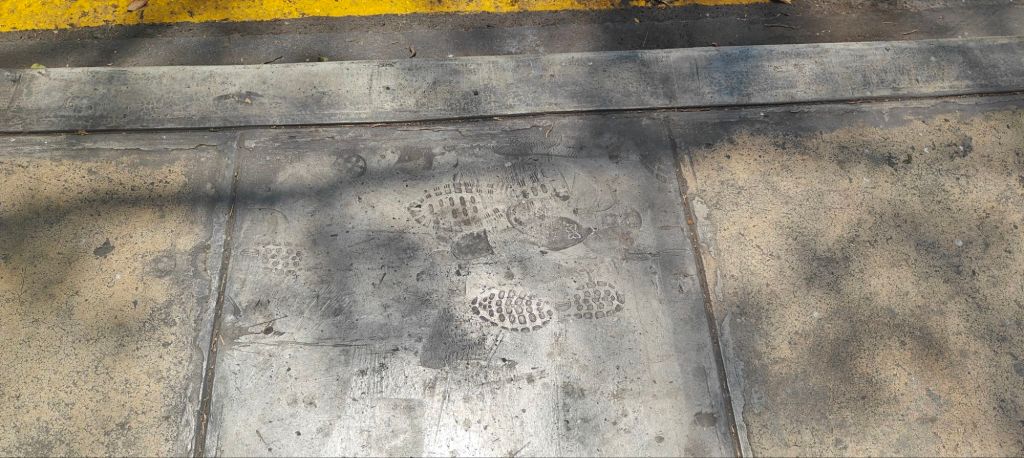
Was it the lack of literal red tape? I’ve been around Peru long enough to realise that when it comes to construction, things are often not done ‘by the book’. Maybe that book got lost in shipping, left on the shelf or simply not read at all (personally I think it is the latter). Unless under the supervision of some mega construction company, many of the health and safety regulations would end up somewhat flouted. With that in mind, would the tape around freshly laid concrete be completely removed from the occasion? Leaving many commuters around the city vulnerable to concrete-covered shoes. Perhaps there is an inside joke about this among Peruvian people that I will later go on to learn. Here’s hoping!
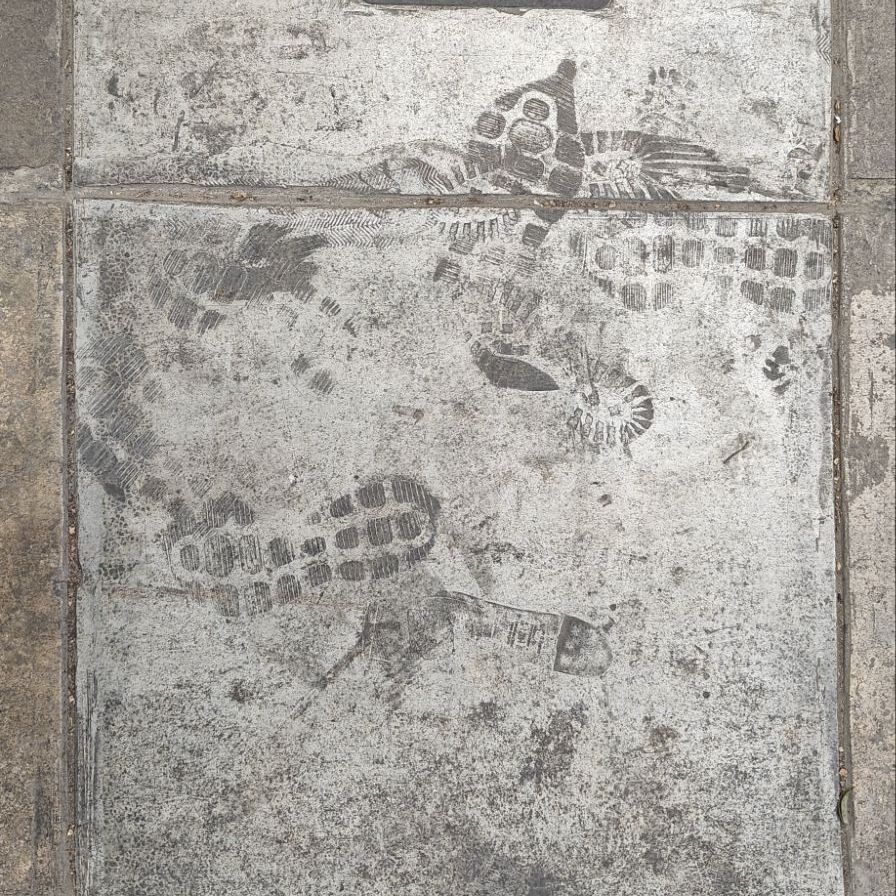
OR was it nothing to do with Peruvian people at all and in fact all to do with the influx of clumsy tourists. Those jetlagged or broken after walking the Inca Trail would be considerably more inclined to make mistakes.

Whatever the reason, the footprints of Lima are many in number and can be seen sprinkled about. From what I can remember they were for the most part a collection of sports shoe imprints, with few high heels scattered about here and there. It is obvious that it was a vast enough occurrence to trigger a sense of enigma in my mind, leading me to write about it.
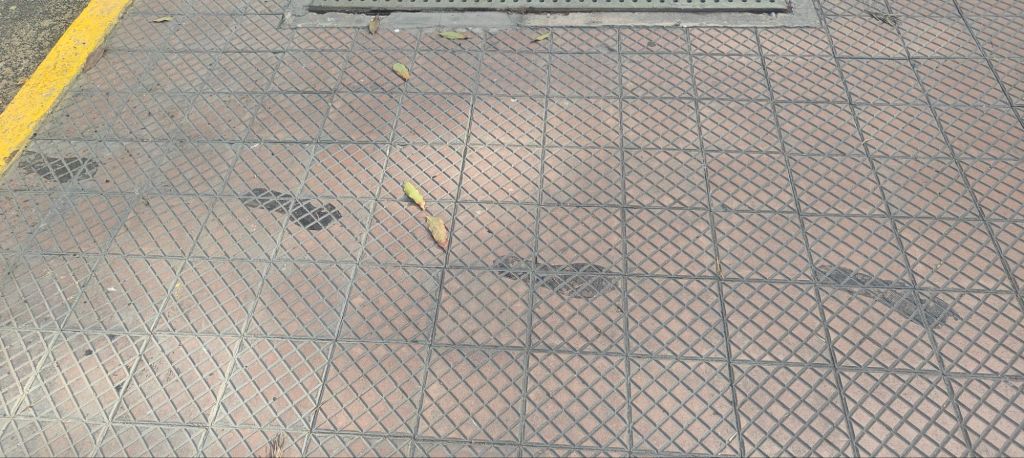
I will likely never know or meet the people whose outlined feet are pressed into the capital’s street. I do not mind this, at least as far as the near future is concerned. I cannot however promise that it won’t keep me up at night when I hit the age of sixty. Maybe I’ll be fortunate enough to create a documentary about this one day. You could argue that in a way, these prints are a form of abstract graffiti, one more personal than even your signature. This would inadvertently make Lima a city full of truly unsuspecting Graff artists which although cool, doesn’t fit the bill.

I think there is a logical answer to this mystery but for now I think it is better off remaining unanswered.
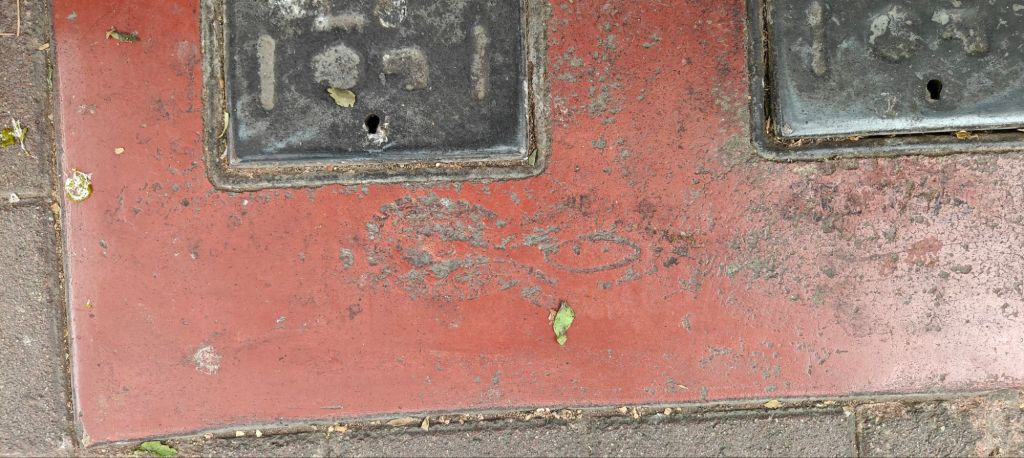
If you are ever lucky enough to visit Lima, make sure you look down. If you do spot any footprints be sure to take a photo. Send them in if you do, or if you are actually a part of an underground footprint-based cult then also let me know. But if the cult does any weird stuff then please don’t bother … only do it if it is a space for the hip and friendly!

Thanks for reading this slightly odd thought experiment, one that as a half-Peruvian myself has allowed me to explore my other half (wait that sounds wrong).
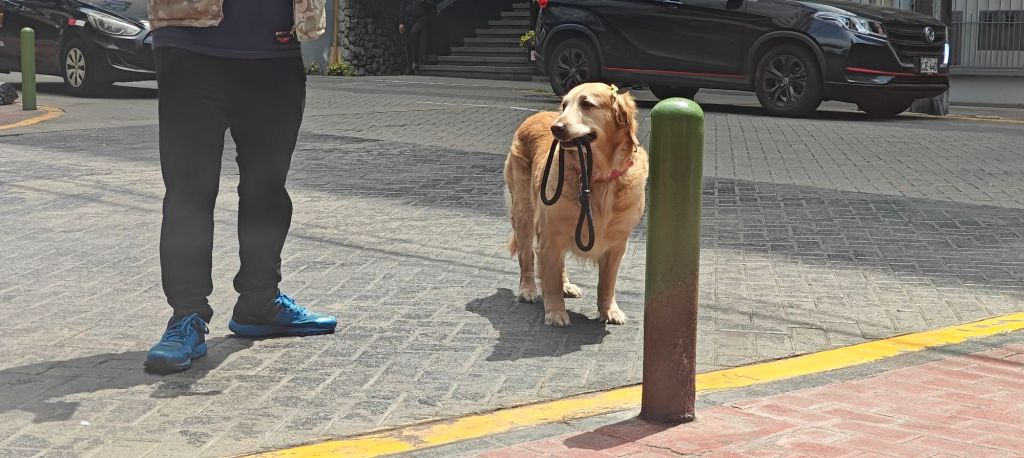
Here’s a cute photo of a dog for making it to the end

What Shoes I Wore On My Trip To South America

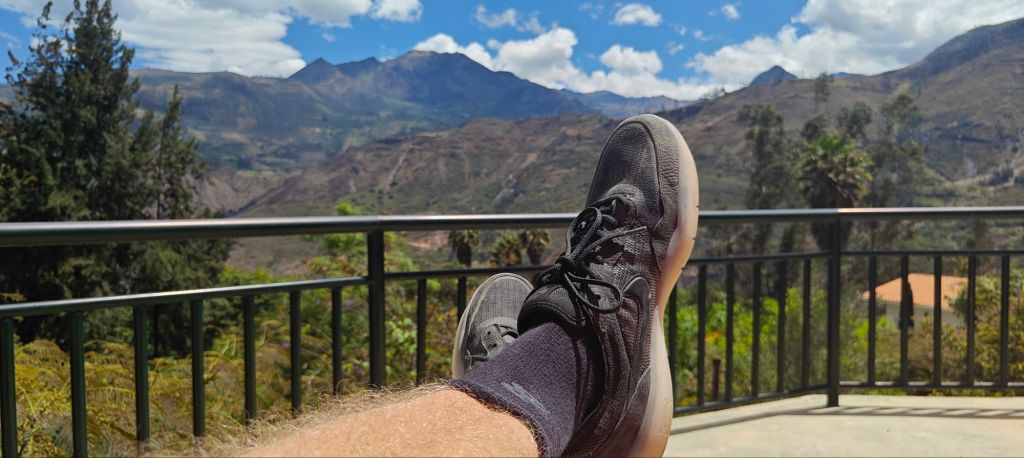
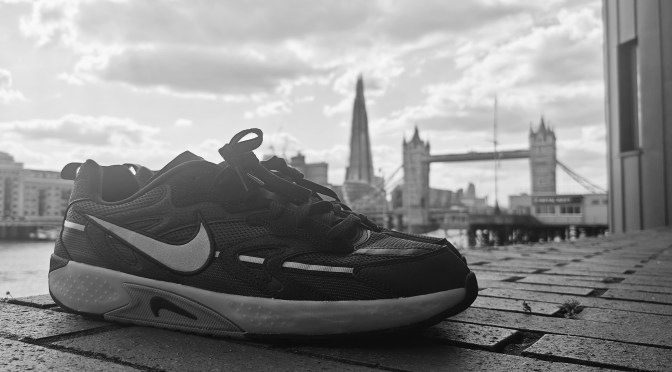
While my time away may not have been the ‘Grand Adventure’ I wrote about a few years ago, it gave me a taste of what to wear on foot. Heading to Peru and Brazil for just over six weeks, I took 3 pairs of shoes. These were the La Sportiva TX4, Salomon Speedcross 4 GTX and Nike SB PS8. The first two I had already trialled out in my last trip to Peru ‘22 so I knew how they already passed muster, but the PS8 still had a lot to prove.

The night before the flight out I spent umming and ahhing between taking my recently purchased Nike Lava Domes from ‘03 or my just-as-recently pair of PS8s. Eventually, I went with the Nike PS8 simply because they were less likely to fall apart. The Lava Domes I had sourced from Vinted and being over twenty years since they released had me slightly concerned. Unfortunately this meant putting on hold my dream of capturing a shot of me along the Peruvian mountainside that was inspired by the classic ACG advert of the two climbers descending K2. As they say, there’s always next time …

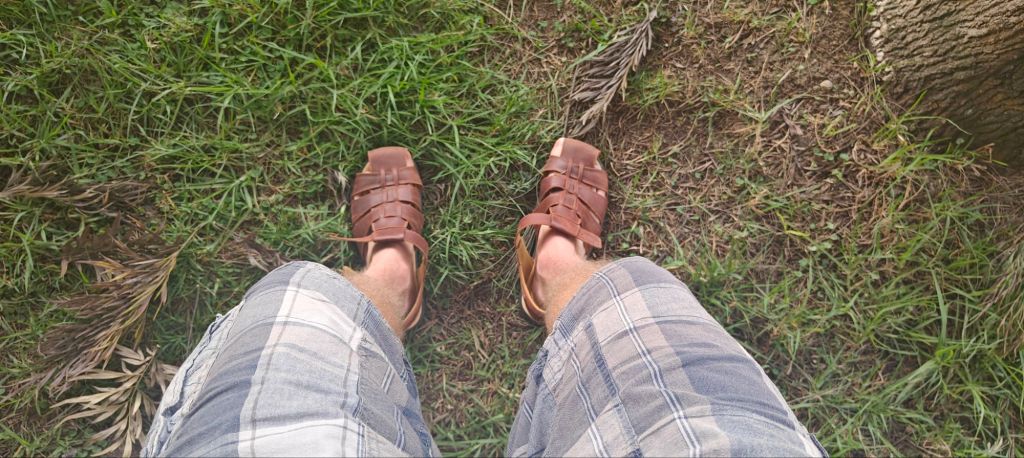
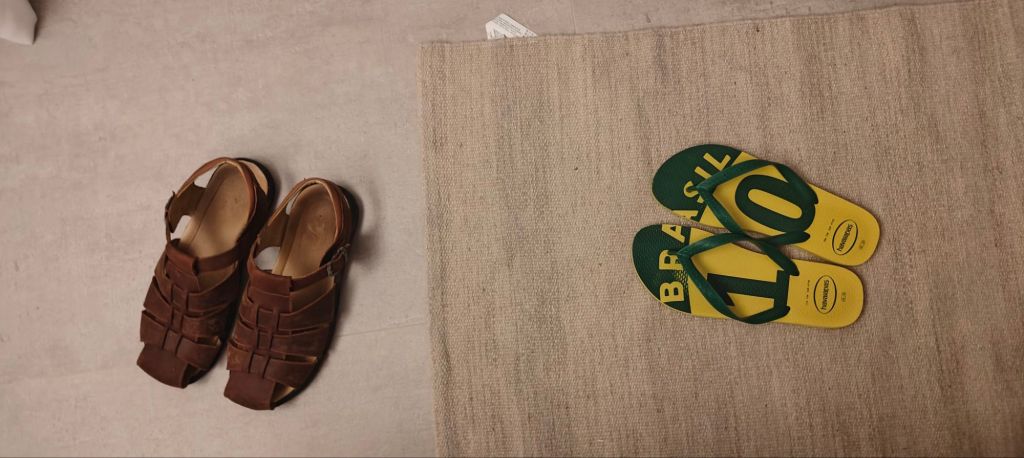
I ended up wearing the Nike SB PS8 until we ascended into the mountainside where I would spend the next three weeks. There I would end up swapping in a pair of Fisherman Sandals I had bought from the Trujillo’s footwear district. These ran me back 120 soles or approximately £20 and had me feeling like a prime Steve McQueen (minus the charm and sex symbol status), a small price to pay considering.

The Fisherman Sandals I wore for the majority of my time in Peru, were similar to our protagonist from Kerouac’s On The Road and how he swore by his pair of Mexican Huaraches. Admittedly, I was clocking in significantly fewer miles on foot, although if we count the number of air miles they tallied up then it could be a close call.

Allowing the tootsies to breathe as well as providing decent protection from any tarantulas crawling about the dark meant the Fisherman Sandals soon became a favourite of mine. Being light enough to carry, I was also able to strap them onto my bag throughout the travels between airports, revealing to me the importance of weight. Romanticising the idea of knocking about in a pair of heavy-duty leather boots during future trips has since become less practical.

Arriving in the northerly beach town of Natal, Brazil would suddenly render my Fisherman Sandals less than ideal. Having a knack for carrying around sand and creating funky tan lines were just two teething points I discovered during my first two days. Not to mention they only helped me stick out like a sore thumb, a fact I tried my best to disguise for multiple reasons. That being said, the Umbro England shorts I wore as swim shorts didn’t aid this disguise.

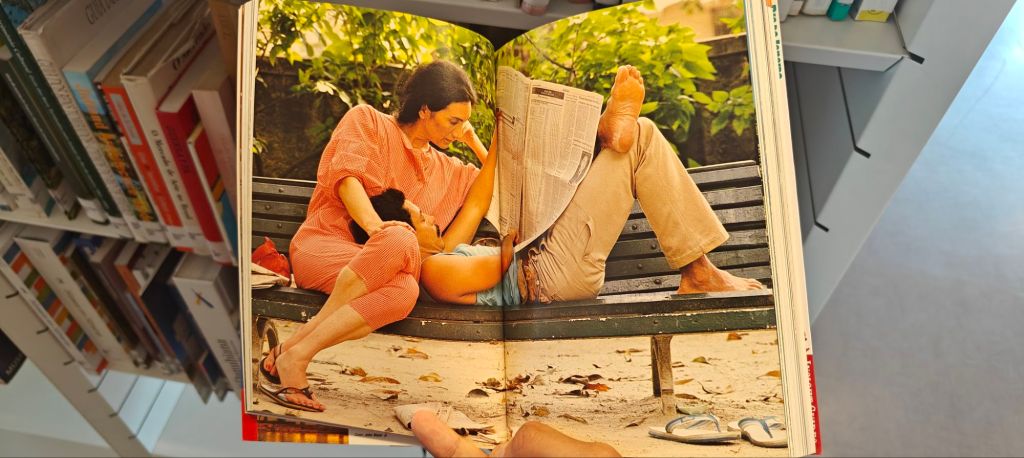
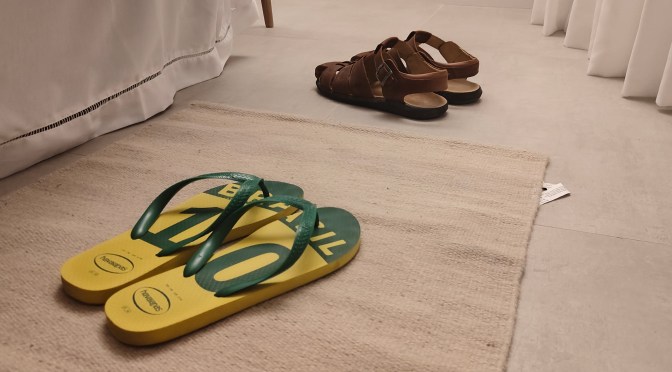
On day three I’d had enough of my Sandals and wandered into one of the many Havaianas shops along the beachfront. I spotted a pair of football-inspired ones hanging from the racks, a familiar yellow and green beckoning from its spongy sole. At a retail price of 25 Real (approximately £4), they were soon slapping against the bottom of my feet like an old friend (a metaphor which doesn’t really make sense but sounds great).

A Haviaianas advert I spotted in the Modern Art Museums Library

A week or so later I was in Rio, a city I had longed to set foot in for the past two years. For this leg of the journey, I had booked an apartment about 800 meters from the beach. Here my daily step count shot up and I would find my Fisherman Sandals coming back into action. Getting about the older parts of the city where the financial district and museums were would also mean blending in to avoid any of the more colourful characters and tourist traps. This was also relatively easy thanks to the Flamengo F.C shirt I picked up from the high street in Ipanema.

Once out in the warmer climates of South America, the need for fully protective footwear was less of a concern. This was partly because I wasn’t exactly hiking up mountains each day, although trips into the Peruvian village for dinner at night did mean having to lace up my Speedcross 4s. The longer I can wear open-toed footwear the better, although when it came to steep descents, these types of shoes inevitably fell short.

One of the many great Vibram sole swaps out there today

This leads me to think that a pair of Keen Sandals could be worth trying next time. Either that or a pair of hybrid Fisherman Sandals that has a lugged Vibram outsole glued on. Perhaps even one of the New Balance Niobium concepts however the most minimal section of the shoe usually relies on a slipper-based silhouette, defeating the whole open-toe objective. While I am not seriously considering taking my Fishermans to the Vibram workshop in London to get them kitted out, you do only live once as the famous saying goes. Plus with all the astroturf hybrids coming into fray, I wonder if a trail-inspired Fisherman Sandal is as radical as it sounds.

It goes without saying that travelling for any significant time abroad does mainly concern the climate. For example, my cousin swears by her Salomon XT-6s which she wore for the entirety of her trip around East Asia. Secondly, ‘fitting in’ or not attracting attention plays another major role in the decision-making process.

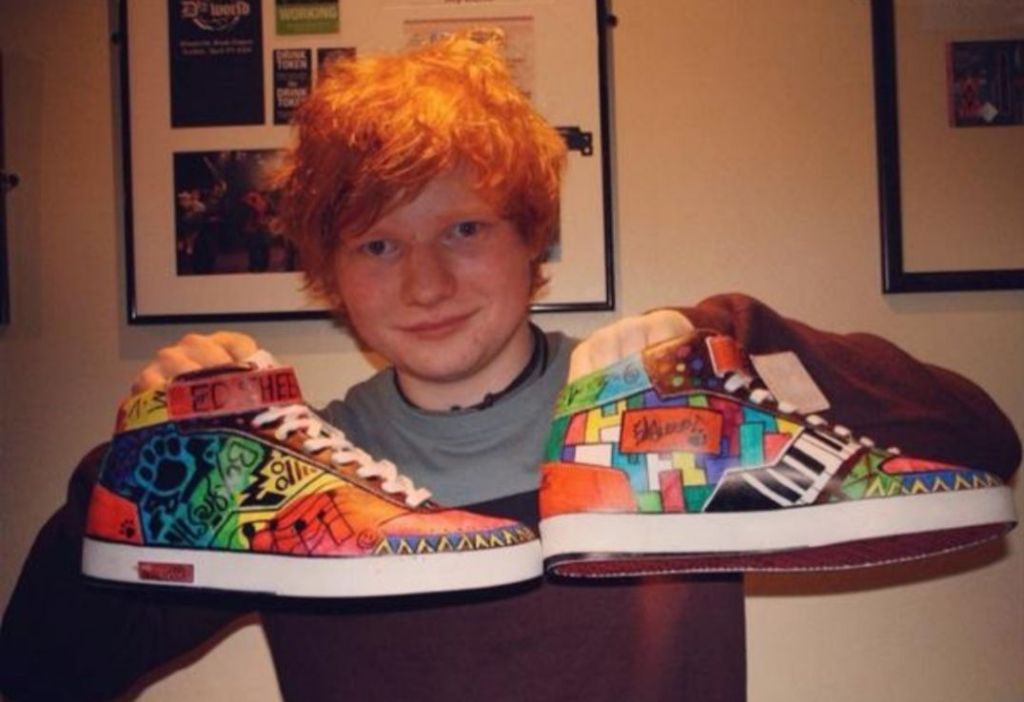
If you can source a locally-used piece of footwear for a reasonable price, then it not only speaks towards your respect towards the culture you are currently emersed in but it can also act as a symbol of the time spent in said space. That said, if you’re rocking around in a pair of Havaianas and you’re Ed Sheeran, the fiery red hair on the top of your head will likely outweigh your snazzy set of flip-flops… so swings and roundabouts really.

Ed Sheeran in 2009 showing off the least inconspicuous pair of high tops imaginable

[On a further note, the idea that global popstar Ed Sheeran can simply ‘blend in’ anywhere on this earth is silly – so no type of footwear will help this matter, just in case he reads the blog].

10 Abadoned Footwear Projects

Having had the idea to focus on Abandoned Footwear, it recently came to mind to ask Perplexity for some previous examples where this has been the focused topic. One of the most interesting and similar concept was Daniel Bass’ 2004 project, which involved Lost Shoes. An exhibition that also cropped up was that of Chiharu Shiota’s work which initially sparked the idea in my mind. The following is great food for thought and was worth sharing.

There are several notable art exhibitions and installations that focus on abandoned shoes, often using them as powerful symbols to convey deeper social and historical messages.

1. Shoes on the Danube Promenade

Located in Budapest, this poignant memorial features 60 pairs of iron shoes set into the concrete along the Danube River. Created by film director Can Togay and sculptor Gyula Pauer in 2005, the installation commemorates Hungarian Jews who were shot on the riverbanks during World War II. The shoes symbolize the victims’ abrupt departure from life, evoking a strong emotional response as viewers are confronted with the tangible absence of their owners.

2. Thousands of Shoes on Capitol Hill

In March 2018, over 7,000 pairs of shoes were displayed on the lawn of the U.S. Capitol as part of a protest against gun violence, particularly in schools. This installation aimed to represent the estimated number of children killed by gun violence since the Sandy Hook tragedy in 2012. The visual impact of the shoes served to humanize the statistics and evoke collective trauma associated with mass shootings.

3. Hammer Projects: Chiharu Shiota

Chiharu Shiota’s work often incorporates found objects, including abandoned shoes, to explore themes of memory and loss. Although this exhibition took place from March to August 2023 at Hammer Museum in Los Angeles, it highlighted how such objects can serve as metaphors for personal and collective experiences.

4. Walk This Way Exhibition

The Dallas Holocaust and Human Rights Museum features an exhibition titled “Walk This Way,” which explores women’s history through footwear. This exhibition reflects on how shoes can symbolize women’s evolving roles in society over the past 200 years, emphasizing their significance beyond mere fashion.

5. Overboard

This exhibition, held in Washington, D.C., features handcrafted replicas of Nike shoes made from discarded materials, inspired by the “Great Shoe Spill” of 1990 when thousands of shoes fell into the Pacific Ocean. Artist Andy Yoder created these sculptures to provoke thought about waste and consumerism while drawing attention to the environmental impact of discarded footwear.

6. Lost Shoes by Daniel Bass

Daniel Bass’s installation consists of a grid of 135 photographs depicting lost or abandoned shoes, primarily taken in Kent, England. This collection highlights the stories behind these forgotten items, transforming them into a commentary on loss and memory through visual art.

7. Footprint: The Tracks of Shoes in Fashion

Located at Antwerp’s Fashion Museum (MoMu), this exhibition gathers around 600 pairs of designer shoes from the 20th and 21st centuries. It explores the emotional connections between shoes and their wearers, emphasizing individual stories rather than focusing solely on the products themselves.

8. Concealed Shoes in the York Castle Museum

This collection features historical shoes that were hidden in walls or under floors as protective talismans against evil spirits. These concealed shoes provide insights into past beliefs and practices surrounding personal belongings, illustrating how shoes can carry significant cultural meanings.

9. The Shoe Memorial at the United States Holocaust Memorial Museum

This poignant installation includes 4,000 pairs of shoes confiscated from victims at the Majdanek concentration camp. The varying sizes and conditions of the shoes serve as stark reminders of the individuals who suffered during the Holocaust, transforming each pair into a powerful symbol of lost lives and humanity.

10. The Shoes Project by Various Artists

This ongoing project features installations across various locations where artists create pieces using abandoned shoes to address themes of homelessness, loss, and social justice. Each installation varies in style and message but collectively aims to raise awareness about societal issues related to displacement and neglect.

These exhibitions not only highlight the aesthetic qualities of abandoned shoes but also engage viewers with profound narratives about history, memory, and social commentary.

Long Form Nike Dancing Piece

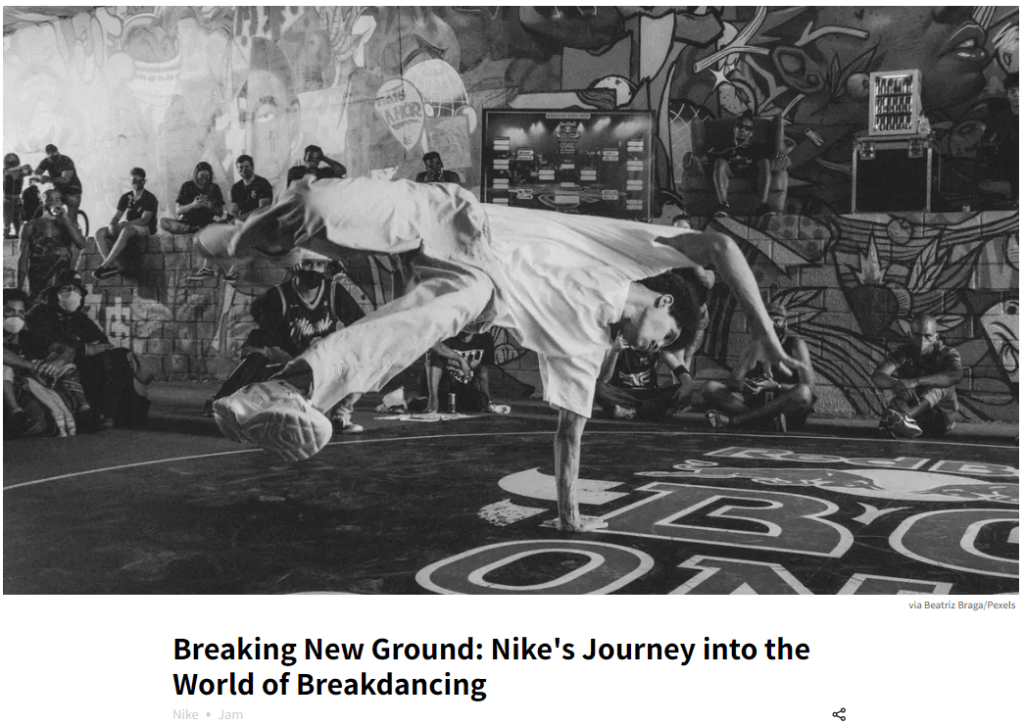
Having been interested in the potential of the Nike Jam, I wanted to explore the world from which the shoe came. Digging into the history, I stumbled across Nike’s venture into dancing and breakdancing. From cool old adverts to the undiscovered talents of Sofia Boutella, writing this piece was fun.

If you do fancy giving it a read then here you go: https://thesolesupplier.co.uk/news/breaking-new-ground-nikes-journey-into-the-world-of-breakdancing/

Shoe Poems: 003

The shoes we lace up on our feet,
are funny little things,
they cause grown men to scream and shout,
and sometimes even sing.

I had a pair colours blue and red,
they really made me smile,
now sat in my dark cupboard,
I've not seen them for a while.

I spent and bought one too many,
it would be wise to stop,
but when you see them on the shelf,
I cannot help but stop.

I stroke my chin, convince myself,
I really need this one,
when I really need a holiday,
some sun, the sea and fun.

It's hard to wear shoes on the beach,
there's sand just everywhere,
but stood in my fresh new shoes
I don't think I'd even care.

So here's to no more shoes,
yet many trips abroad,
to stop buying as many shoes
to that you have my word.

Abandoned Shoe Stories

When browsing the web for more hidden books on footwear, I came across a rather interesting magazine on Onitsuka Tiger. Among the photos in the advertised post was an image that detailed an assortment of shoes all of which had a red piece of string tied to them. Fascinated by this photo, I would soon learn that this was an exhibition created by a Japanese artist called Chiharu Shiota. In her piece called Dialogue from DNA, Chiharu viewed footwear from a perspective I’d never considered before, finding how “objects can contain the air of an absence, about how nothingness often speaks volubly about objects and people.”

Photo by Sunhi Mang

“One of Shiota’s favorite works is an assortment of used shoes that she collected from various people in her neighborhood in Osaka. “I asked them to write out little histories attached to the shoes, and the result was extraordinary,” she says. “I got messages about how a woman wore a particular pair of black pumps on the day of her husband’s funeral, about a girl who had worn a pair of sneakers on the occasion of a break-up with her boyfriend. Some of the shoes were battered and had holes, others were crushed and looked like cabbages; others were practically new but a little sinister-looking.” Shiota displayed the shoes in such a way that they looked as though their owners had just left them there temporarily, and would soon be back to wear them and stride out the door.” – Page 50 Onitsuka Tiger 60th Made Of Japan. (Words by Kaori Shoji. Photo by Sunhi Mang.)

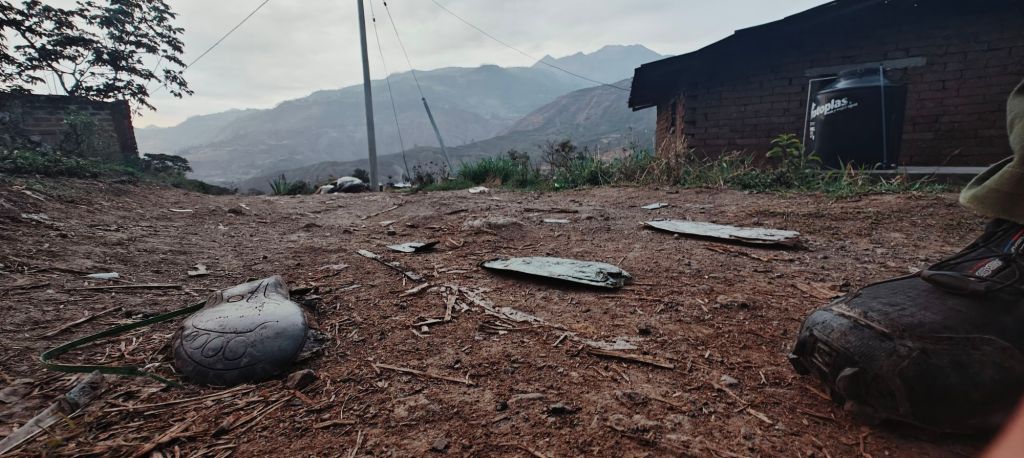
I recognised this view myself, having photographed abandoned footwear since my trip to Peru back in 2022. I think what sparked it was when I spotted a sandal being ingeniuously used as a door hinge. At that point, the object had transformed into something I had never realised it could be. During the time it made me chuckle, but since I have taken it to be a revelatory moment.

Since moving to the Big Smoke I have found myself taking photos of any discarded shoes that I have come by, all in the hope that I can one day include them in my book on shoes. Giving people a multi-layered approach to the vast world that is the objects that go on our feet.

A pair of Nike Lunar runners left at the bottom of a communal bin in Manchester (June, ’22)

To a certain degree, shoes are the only item of clothing left that truly reveals who we are, at least when it comes to the Western world and the generation born in the 90s upwards. Similar to what Yohji Yamamoto was saying in Wim Wenders’ documentary about him, the days when you could tell someone’s profession by what they wore are long gone. A shoe says a lot about someone, even more so when they are not being worn by said person. Whether someone is shy or confident, how they walk, their beliefs, their ability to dance the night away, their priorities and their insecurities are all tied onto that person’s foot at the start of the day.

Clearly this person’s priority was for their feet to stop hurting. Bun heels.

However tempted I have been to pick up these discarded trainers or sandals, I realise that it would not be practical in the slightest, especially because I already own more shoes than the average person. So having considered the moral and even hygienic aspects of taking all these objects, regardless of if I end up hosting what could be a similar exhibition to Shiota’s Dialogue from DNA, I have decided it best to stick to a digital perspective (…at least for now).

Where Shiota has asked the person who donated their shoes to add a storied note, I will have to stick to a combination of simple facts as well as a sprinkling of artistic license. Where I found the shoe, the type of day it was, what mood I was in, what brand and year the shoe is from are all questions which first spring to mind.

A knit-based shoe washed up on the shores of Huanchaco, Peru (Feb ’22)

If you do know of any picturesque pieces of footwear that have been thrown away on the streets of London, then by all means drop me a message or better yet, send in a shot that you took yourself!

Footwear Grails: The Nike Mercurial Moc

A few years ago during the first lockdown, I spotted a cool photo of England forward Emile Heskey. Now while the ex-Liverpool striker is an icon in the world of football, his off-pitch dress sense was not something he was known for. Either way, in the photo shown below, Heskey is seen posted up with three other England teammates in their rest day attire. All of them are rocking a form of Moc hybrid, however, the main man steals the show with his murdered-out pair of Nike Mercurial Slides.

Having acknowledged the Mercurial line as a legendary football boot during my younger years, this Hyrbid Moc was definitely a piece of footwear I was eager to get my hands on. Since March 2020 I kept my eye out for them, searching far and wide, only coming across the occasional UK6 at a hefty price point. Naturally, my hopes began to fade, this was until four years later when an impromptu lunchtime Vinted-browse finally had me stumbling across them. Frantically messaging the seller for more photos and a size confirmation, I managed to secure them for just under £30.

Granted they did look a little worn, but nothing I couldn’t brush past with a fine comb and a can-do attitude. Collecting them from the local In-Post locker a few days later, anticipation was so high that I ended up ripping apart the packaging and waving them in the air like that toilet paper scene out of Stepbrothers (if you don’t do this every time you buy a 12 Pack then get in the mix).

As soon as I made it back home they went straight on feet, envisaging myself enjoying a day off from the National Team’s training in a full Umbro tracksuit … oh and also as Emile Heskey (the latter of which was harder to imagine). The mood took a slight hit once I found out that the left foot smelt of cigarettes, a risk any Vinted warrior has to endure from time to time, needless to say the top-down view was worth marvelling at.

Waking up the next day and checking up on how the “freshening up” process was going, I was also hit with the fact that they were a size UK11 and not UK12. A detail not too upsetting had it not been for me asking the seller to double check if the sizing was correct but alas, I would still be able to prance around the house feeling like an off-duty Heskey so not all was lost.

In hopes of lifting my spirits, I trekked down to the Thames to snap a photo of my new favourite Mocs in front of Tower Bridge. A questionable act, yet one that made sense in my head. Finally hunting down a grail which admittedly smelt of a forty-pack and was one size too small felt good, so to celebrate the achievement I decided it necessary to photograph them in front of the symbolically powerful Tower Bridge. For any of you still trying to hunt down that elusive item, dreams can come true!

Buying Shoes in Return To Seoul

I finally watched Return To Seoul the other day. It will stay with me for a long time. As if this was Ji-Min Park’s debut acting appearance.

Similar to a scene in Paris, Texas by Wim Wenders where the protagonist has a line of shoes sat on a wall after having polished them because of his insomnia.

This scene involves the main character’s (Freddie) father offering to buy her a pair of shoes from the village market from his childhood. There’s a deep connection when buying someone footwear, especially when it comes to your child.

Here, the father takes the opportunity to protect his daughter’s feet, a role he would have enjoyed filling if he had not regrettably given her up for adoption decades ago. His longing for connection is a feeling we encounter throughout the film’s runtime, achieved here in a minor way through this simple act.

Growing up in a catholic school, you would often hear about Jesus washing the feet of his disciples. A symbolic act, this idea was referred to many a time, its meaning something I still have yet to fully appreciate to this day.

The symbolism in this scene can go amiss, it’s only fleeting afterall – yet its moments like this where director Davy Chou has gradually painted a portrait which feels so very real.

If I ever create a book about footwear then best believe this moment will be printed in amongst the pages.

Couldn’t recommend this film more, especially if you’re in your mid 20s.

Sidenote – I do actually rate Ballet shoes

Weekend Finds + Favourites: 07/10/23

The following are just a few tracks and images that I recently came across. I hope you enjoy them as much as I do.

This one I found from a “Moog Board” playlist on Spotify. It gets quite cinematic towards the middle, something I can definitely imagine myself using later on in life if I ever get round to creating a montage of happy memories. Until then it can just remain a fun track.

This one’s a little more on the nose but delivers that feeling of being on the Brazilian coastline. No doubt a classic over there and one I hope to encounter while sipping my morning coffee at my future favourite spot.

Stumbling across this light jazz number towards the end of listening session, a favourite from the Japanese Jazz playlist I had great fun delving into.

Nike Fuelband, patent leather Air Force 1s and two Yeezy’s off of Virgil’s old blog, an era dripping in nostalgia. One day I hope to drop a Bobbito-style book with my life’s take on footwear but for now, a small dump on the website will have to do.