Tag Archives: footwear

Visiting Peruvian Footwear Markets in Trujillo

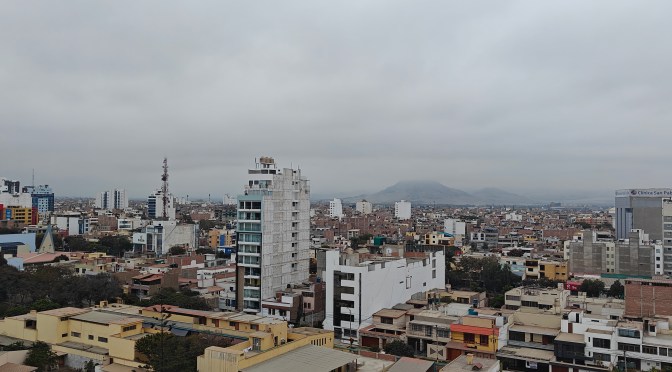
I stop in Trujillo every time I touchdown in the country. Luckily for me, the City of Trujillo is known as the capital of footwear in Peru. Now, added to that list of places to visit is the footwear district of El Porvenir, which I visited for the first time during my 2024 trip.
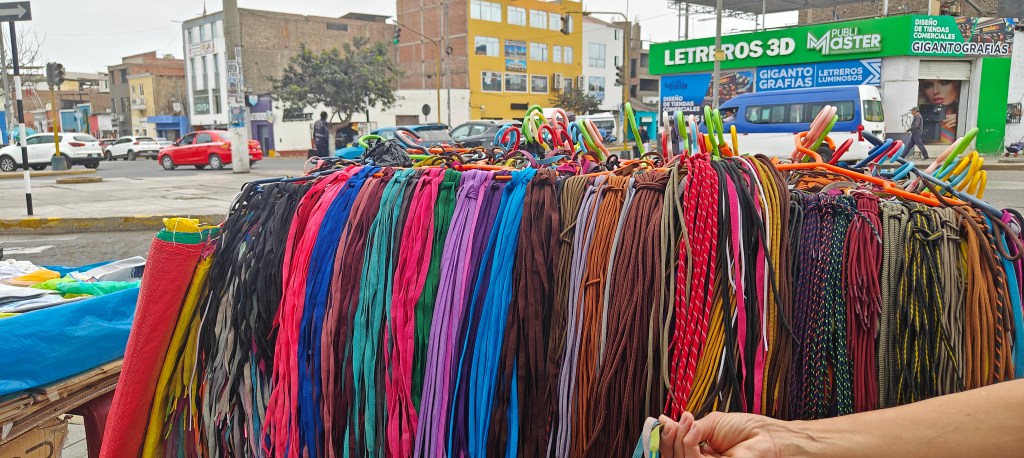
Shoe lace cart outside of El Provina footwear district in Trujillo
An old man carting a selection of shoe laces was what first greeted us as we approached the outside of the district. 2 sets for 5 Solles which in hindsight was a rip off but hey hoe.

Heading from the hotel, we were told to keep our guard up when walking around the manufacturing district in EL Porvenir. This is due to many thieves and armed criminals in the area, a situation which only worsened because of the economic drought the province suffered during Covid. Interestingly enough, on one of our rides back from the footwear district, the taxi driver informed us that there was a daylight shooting in one of the fanciest areas of Trujillo, proving you can never be too careful. Luckily for us, our ventures to the district were all glowingly positive.

From craftsmen who had worked in the district for over thirty years to ladies who sold footwear components in bulk, you could find each stage of the process. Large sheets of leather all rolled up next to one another would eventually become the uppers of smart shoes worn by the older Peruvian man, a model that seemed to forgo the typical decadence of the European Brogue.
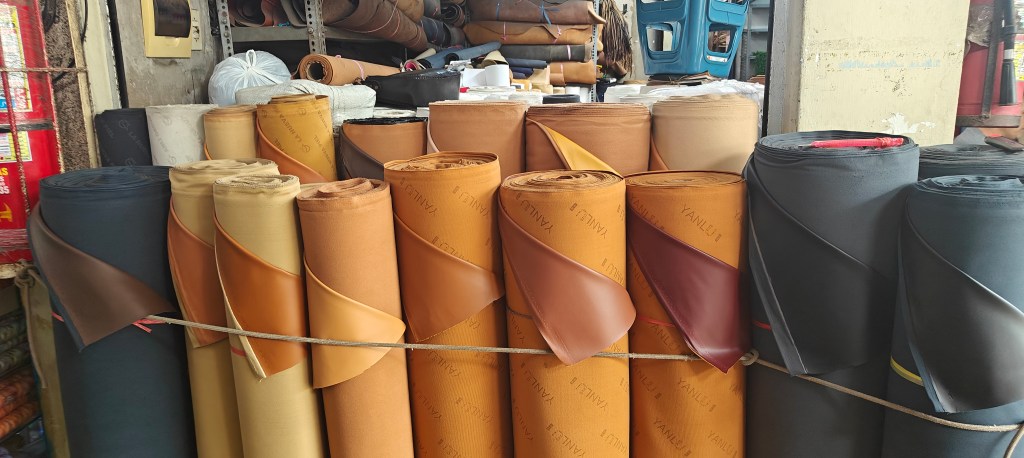
Leather in swathes available at the Peruvian footwear district
swathes of leather held together at the Peruvian footwear district

An elderly lady sorting bundles of loose laces stands under a selection of tongue labels from all the most popular brands. She had likely been surrounded by footwear long before I was born, a humbling thought for any shoe dog out there. That said, I don’t think she was lost in thought over any pending eBay bids or going through her mental checklist of ‘grails’, that sort of thing did not hold weight around her stall.
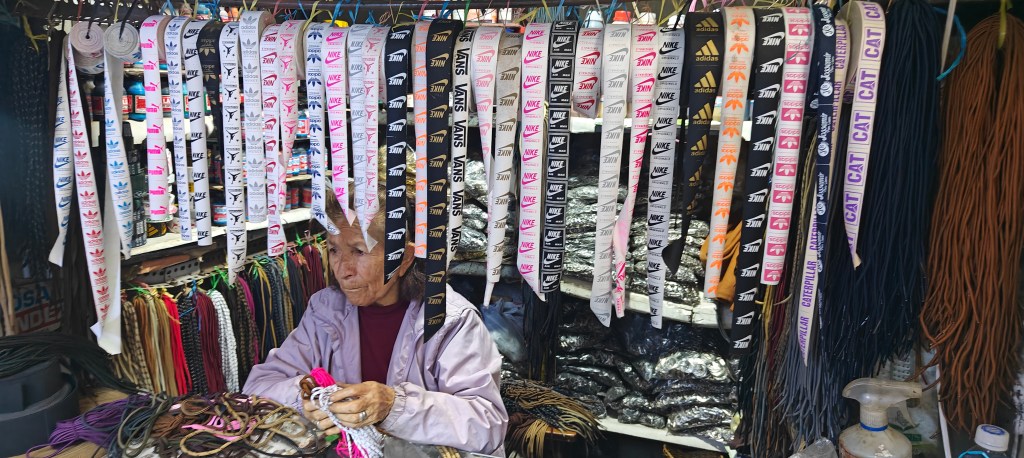
Old Peruvian lady in footwear market with footwear tongue labels in rolls above her head
Peruvian Lady working her stall at El Provinar Trujillo

Much of the equipment allowed for repairs or alterations such as the pair of knockoff “AAICS” shoes that were being widened for a customer, as the average Peruvian tends to have a wider foot. Here the machine would introduce a wider metal last to slowly stretch the forefoot portion of the upper and create extra room in the toebox. This was a natural part of the process with no sight of #sustainability posters stuck to the walls. Getting the most out of your resources was just simple logic.

white and grey aacis shoe on green metal footwear stretcher
The pair of knock-off ASICS that were midway through the ‘widening’ process

Laces, dubraes and buckles were also available by the bulk load, each vendor willing to bargain with you depending on the size of your order. My Mum picked up 10 sets of flat laces to go with her favourite New Balances, this only set her back 20 Solles or £4.

rope lace selection at Trujillo Peru footwear district that would overwhelm any sneakerhead

I on the other hand managed to pick up a small bundle of Nike lace dubraes for less than 50p, a harrowing reminder of how much brands truly overcharge for footwear in the UK. Sure shipping and marketing costs add to the overall retail price tag, however sneakerheads who are easily blown away by extra detailing and packaging would be surprised at the pence per unit difference that these manufacturing costs would actually make. Two extra sets of laces are always an appreciated touch, costing the brand perhaps 10p in addition but a detail that during the video review stage could help tip customers over the edge.
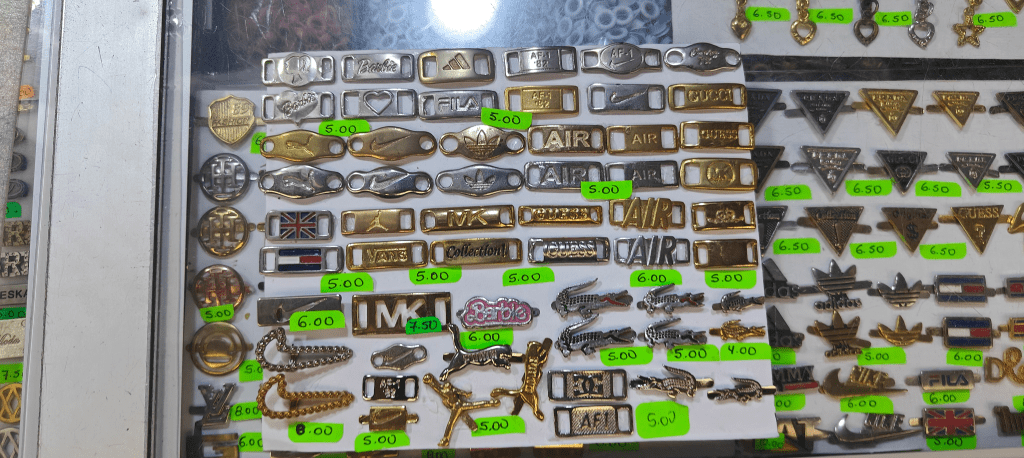
nike jordan prada and adidas sneaker dubrae for sale at peruvian footwear markets
assortment of dubrae bundles to jazz up your laces with

For a minute I thought about going full fugazi on my recently purchased Nike PS8s by adding an extravagant Lacoste or Barbie dubrae but refrained, opting for a simple set of Nike ones instead.
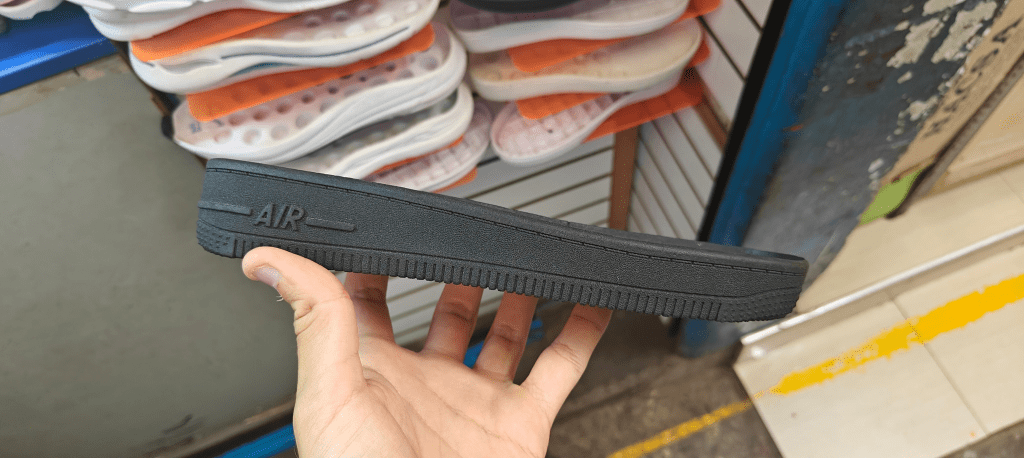
triple black air force 1 midsole units from factory
Pair of knock-off Air Force 1s in “Triple Black” – if you buy these there is a high likelihood that they will manifest crud into your life.

Midsoles were available by the bulk, including the Predator or Air Force 1 option shown in-hand. Did I want a set of murdered-out AF1 midsoles to take back to the UK? Yes, of course I did. Although that would have been a completely unnecessary purchase, not even bothering to ask what the cost price was.
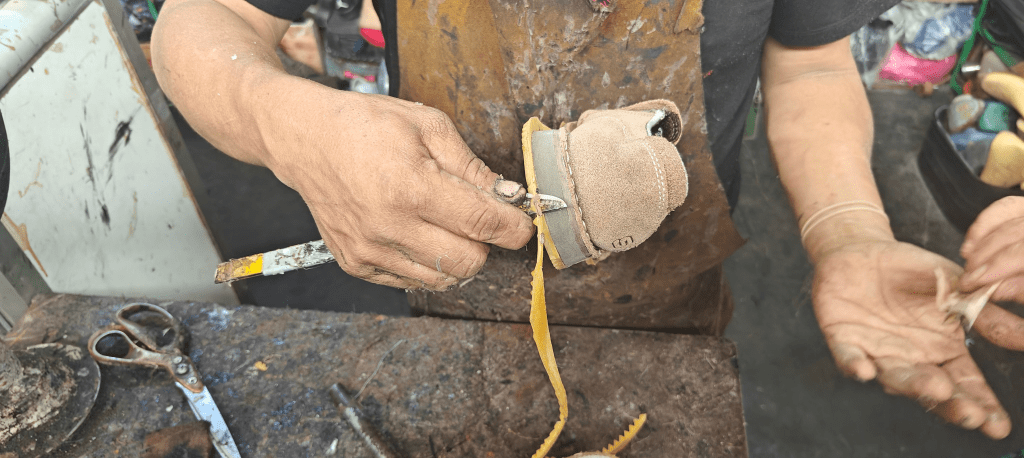
peruvain footwear market vendor cutting excess rubber from outsole on shoe

I approached a gentleman cutting off the excess outsole with a sharp blade, all the while making sure not to capture his face in the photo so as to respect his privacy. This did not sit well with him as he wanted his moment in the spotlight, a form of recognition for surely was a line of work he had spent decades in.
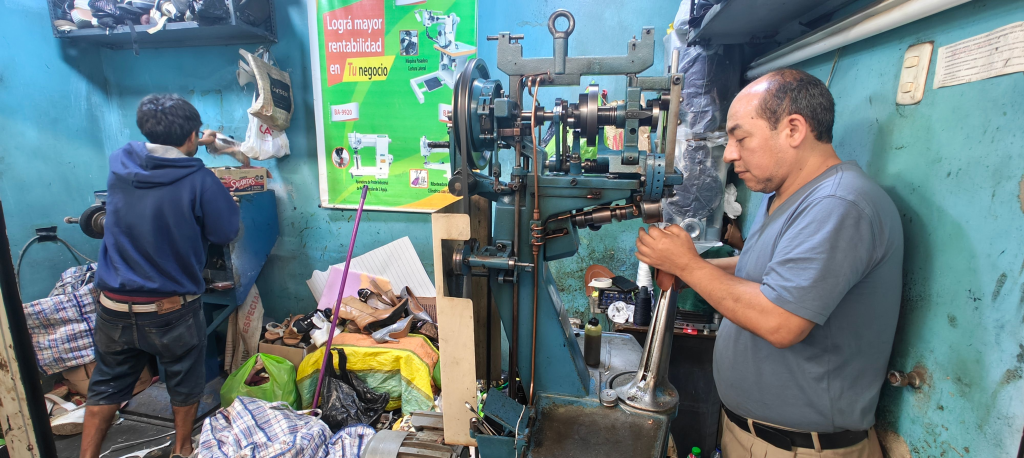
experienced peruvian footwear workers making formal footwear for men
Cobbler manning the welt stitching machine

Another man around the corner was operating what he told me was a welt stitching machine that had been running since the ‘80s. Punching a needle between the leather midsole and upper, he continued to produce a set of light tan work shoes that would find their way onto the feet of the businessmen of Trujillo.
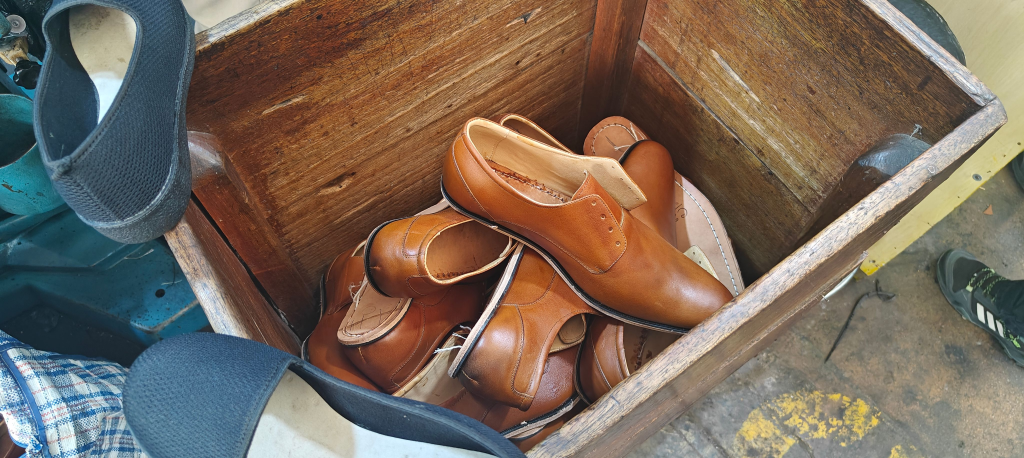
brown formal footwear uppers ready to be machine stitched onto sole unit in peruvain footwear market

I had only seen this level of workmanship in YouTube videos or briefly caught the process at my local Thimpsons. Seeing it at the heart of the manufacturing district of El Provinar was a different feeling altogether. A behind-the-scenes look at the creation process of the shoe, an object that continues to captivate my everyday life.

Often romanticised by the industry via New Balance Made in UK campaigns of adidas’ Made in Germany editions, there was just as much experience and knowledge held within the hands of those who worked at El Porvenir. Of course, without the marketing budget and expensive film crew, these stories will continue to go unheard.
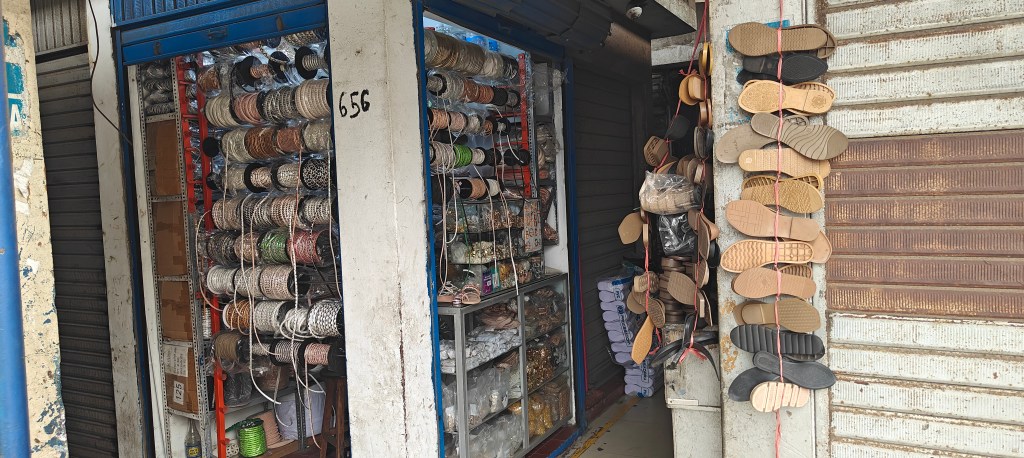
One of the many side entrances of the Footwear District in Trujillo, Peru

My second visit to the district was a few weeks later. I would return hoping to find an elderly lady called Rosa who was the only person able to make a Last for me. The other vendors would all point towards the direction of her shop, each wild goose chase leaving me empty-handed.

“She should be here in the next hour”

“Oh Rosa starts after lunchtime”

“She only works weekends now”

These were the various replies we were told by those who worked there, all of which repeatedly led towards Rosa’s blue shop shutters. While the area was full of skilled workers, she was the only person left who was able to make a custom wooden last. The plastic lasts were widely available for purchase but I only had my eyes set on the traditional wooden ones.
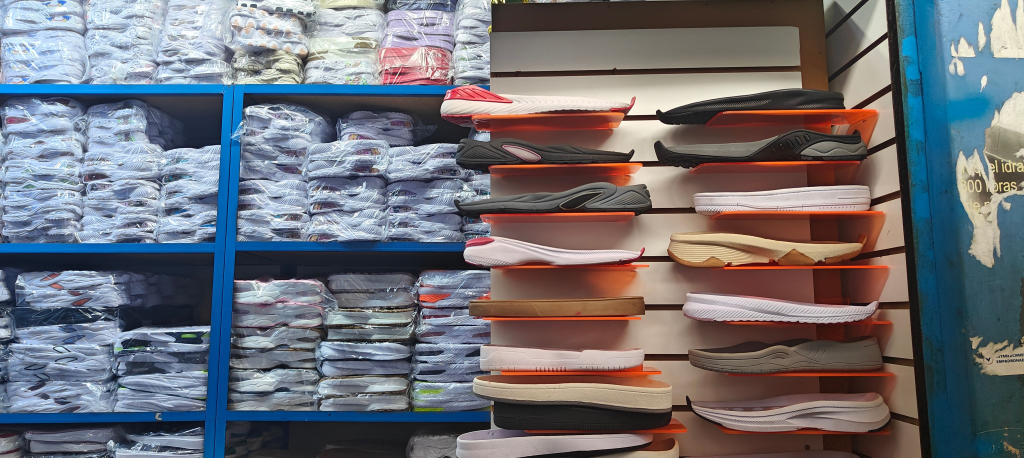
Midsole shop in Trujillo Peru that sold anything from Predator to Air Force 1 units
This vendor was a one-stop-shop for anything midsoles

They would make me feel like a man from the 19th century who had just carted in from the countryside into the bustling city. Wearing a waistcoat and top hat, I would stroll into the cobblers ready to collect my new leather shoes for a friend’s wedding so I could look the part. Yet in reality, I would get the train to Slough where I would turn up in my second-hand Balley Loafers which might be made in France but are also in dire need of re-welting (a tangent but a necessary one).

While you can get a wooden Last made in England, these will run you back an eye-watering amount. For example, John Lobb is a centuries-old bootmaker shop in London that provides this service. This age-old reputation does come with a high price tag, so unless you have a budget of £5000, you can put those dreams on pause.

I am sure the shop gains custom for many a wealthy banker and financial director, but my shoe-writing budget has a way to go before it can stretch that far. I am not complaining though, as each cobbler spends on average 2-4 days per shoe, with the more skilled ones creating up to 5 shoes per week. Calculating the manhours behind each pair and the rarity of those skills in today’s world, the price is sadly justified.

In one last attempt, I stumbled across one of the older-looking shops. A stack of wooden Lasts across his shelves gave me a slither of hope, an episode of Top Cat playing from his old box Television.
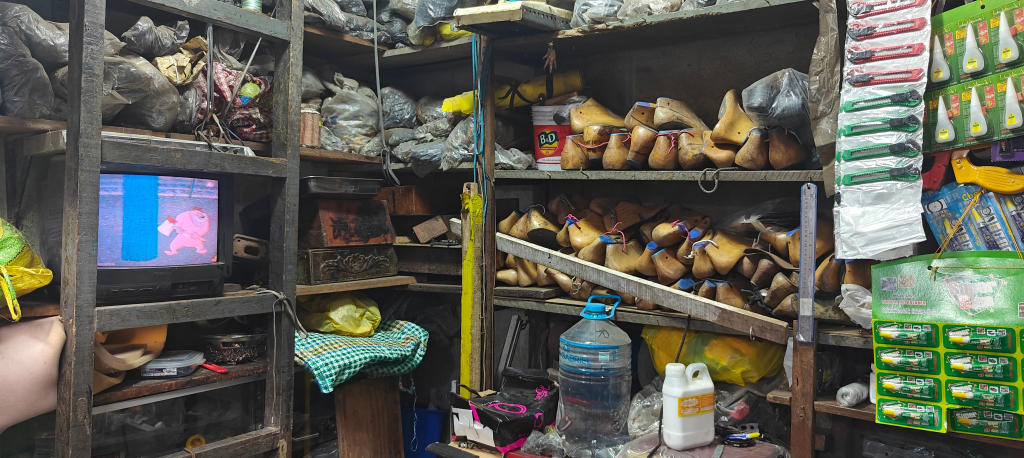
wooden footwear lasts stacked on shelf in a peruvain footwear market
The shop with the wooden Lasts for sale

“Ahh no sorry, I don’t make them. You can purchase one of these though, I’ve got a size 8 you can buy”, Close but no cigar. They also weighed a tonne and space in my return luggage was getting smaller by the day.

I left the district with no wooden Last. That is not to say the time was wasted, as each minute witnessing the manufacturing process was time well spent. It is hard to tell if I would return to the district during future trips, with the mysterious character of Rosa all but lost to the magic of El Provinar (I wouldn’t even know how much she would have charged me either as a UK12 is almost unheard of within that space). Perhaps they will tell her Bigfoot was looking for her, although I would be surprised if I had done enough to earn that reputation.
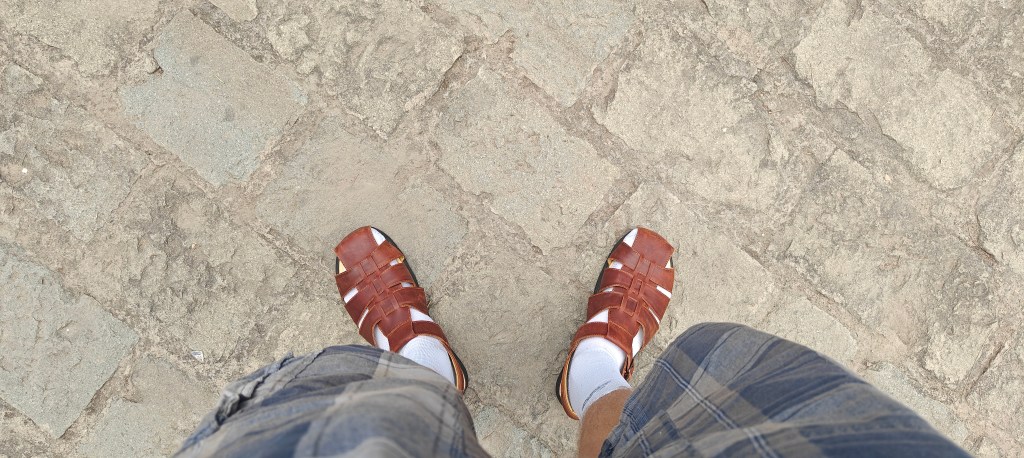
brown leather fisherman sandals with a large brick background as backdrop
A pair of Fisherman Sandals I managed to grab in Trujillo called “Palermo”

If you are in Trujillo and love shoes, then I would say it is worth visiting El Provinar provided you are not going alone. Also, do not take your phone out too much and hide valuable items like your watch or chain. Otherwise, enjoy the behind-the-scenes process and maybe pick up some laces or lace dubraes while there!
Shoe Thoughts: Why Mom & Pop Sneaker Shops Failed

I was listening to Quentin Tarantino talk about video stores the other day. He is not exactly a well-renowned sneakerhead, yet his thoughts about the decline of Mom & Pop video stores had me thinking about the ‘90s sneaker market.

We had the Air Jordan 1 High OG “Lost & Found” drop in 2022, a shoe inspired by the unsold Jordan 1 “Chicago” stock of the ‘90s. Back then the silhouette would hit the sale racks at even $20-40 and still not sell. Thus you would find pairs aging away in the basement stockrooms of Mom & Pop stores out in the US. Mom & Pop stores are just the UK equivalent of independent businesses, an idea that in this day has disappeared off this high street with many saying “support your local”.

Three different '85 and '94 editions of the Air Jordan 1 "Chicago" in a display box at the Sneakers Unboxed 2021 Exhibition at the London Design Museum

Anyway, Tarantino was reminiscing about the time he worked at the local video store, explaining the eventual decline of chains such as Blockbuster. He said that because of the new releases every week and month, the amount of stock that each store would acquire would compound over time. Of course, popular releases would continually get rented, whereas films with a smaller fanbase would fall to the wayside and end up being piled up in the back to make room for other popular releases.

Roger Avery says, “It’s literally a space issue”, in which Tarantino expands saying, “within three to four years you’re literally bursting out of the seams … now all of sudden your tapes are spine facing and it just never stops. If you have a chain you can move things around but if you’re a Mom & Pop that’s just it.”

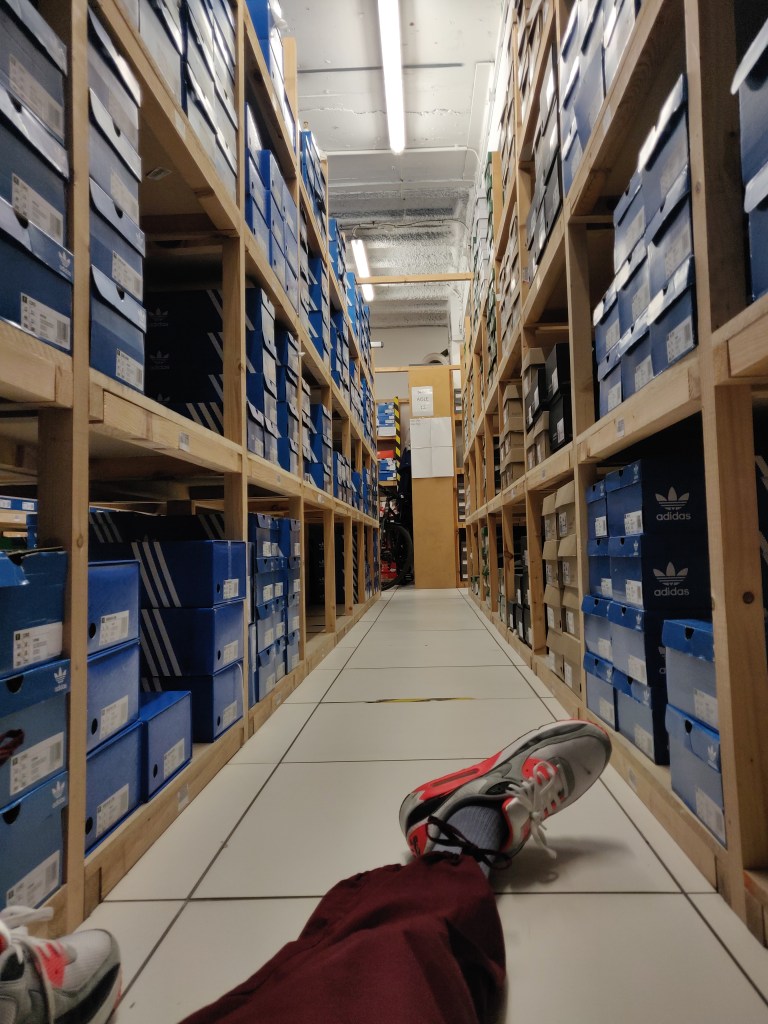
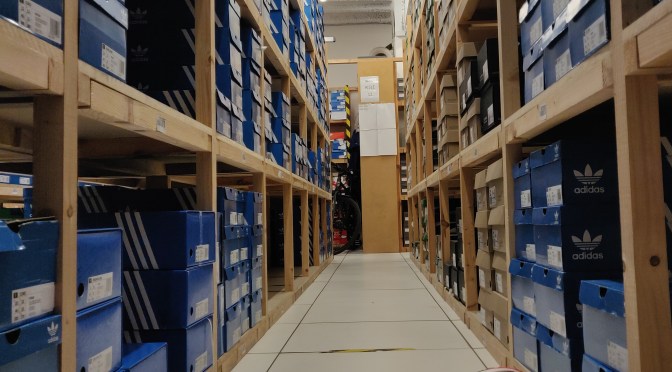
taking a rest in a stockroom full of adidas trainers while wearing the air max 90 Infrared 2020 edition and ACG burgundy zip-off cargos from the 2019 Season

This is no different to sneakers. However, in the ‘90s there was no internet and online shop spaces, at least not compared to the 2010s and 2020s. This meant that sneakers would eventually pile up and up until they ended up overflowing in the basement.

Similar to the film industry, the footwear industry also worked and works on a constant release cycle, with each month bringing in a new array of drops. This is why shoes would become so heavily discounted to the point where you had the sneakerheads from Japan and other celebrities such as Fat Joe coming into these stores to clear out basements worth of stock.

I thought it was an interesting comparison as I finally realised why exactly these Mom & Pop stores ended up having so much old stock. Even though I worked retail myself, it was a chain where stock was allowed to flow to-and-from the main warehouse (a warehouse which was not only many in number but rumoured to be the size of several football fields). So now I am able to understand these local touchpoints for footwear culture operated in the ‘80s and ‘90s.

10 Abadoned Footwear Projects

Having had the idea to focus on Abandoned Footwear, it recently came to mind to ask Perplexity for some previous examples where this has been the focused topic. One of the most interesting and similar concept was Daniel Bass’ 2004 project, which involved Lost Shoes. An exhibition that also cropped up was that of Chiharu Shiota’s work which initially sparked the idea in my mind. The following is great food for thought and was worth sharing.

There are several notable art exhibitions and installations that focus on abandoned shoes, often using them as powerful symbols to convey deeper social and historical messages.

1. Shoes on the Danube Promenade

Located in Budapest, this poignant memorial features 60 pairs of iron shoes set into the concrete along the Danube River. Created by film director Can Togay and sculptor Gyula Pauer in 2005, the installation commemorates Hungarian Jews who were shot on the riverbanks during World War II. The shoes symbolize the victims’ abrupt departure from life, evoking a strong emotional response as viewers are confronted with the tangible absence of their owners.

2. Thousands of Shoes on Capitol Hill

In March 2018, over 7,000 pairs of shoes were displayed on the lawn of the U.S. Capitol as part of a protest against gun violence, particularly in schools. This installation aimed to represent the estimated number of children killed by gun violence since the Sandy Hook tragedy in 2012. The visual impact of the shoes served to humanize the statistics and evoke collective trauma associated with mass shootings.

3. Hammer Projects: Chiharu Shiota

Chiharu Shiota’s work often incorporates found objects, including abandoned shoes, to explore themes of memory and loss. Although this exhibition took place from March to August 2023 at Hammer Museum in Los Angeles, it highlighted how such objects can serve as metaphors for personal and collective experiences.

4. Walk This Way Exhibition

The Dallas Holocaust and Human Rights Museum features an exhibition titled “Walk This Way,” which explores women’s history through footwear. This exhibition reflects on how shoes can symbolize women’s evolving roles in society over the past 200 years, emphasizing their significance beyond mere fashion.

5. Overboard

This exhibition, held in Washington, D.C., features handcrafted replicas of Nike shoes made from discarded materials, inspired by the “Great Shoe Spill” of 1990 when thousands of shoes fell into the Pacific Ocean. Artist Andy Yoder created these sculptures to provoke thought about waste and consumerism while drawing attention to the environmental impact of discarded footwear.

6. Lost Shoes by Daniel Bass

Daniel Bass’s installation consists of a grid of 135 photographs depicting lost or abandoned shoes, primarily taken in Kent, England. This collection highlights the stories behind these forgotten items, transforming them into a commentary on loss and memory through visual art.

7. Footprint: The Tracks of Shoes in Fashion

Located at Antwerp’s Fashion Museum (MoMu), this exhibition gathers around 600 pairs of designer shoes from the 20th and 21st centuries. It explores the emotional connections between shoes and their wearers, emphasizing individual stories rather than focusing solely on the products themselves.

8. Concealed Shoes in the York Castle Museum

This collection features historical shoes that were hidden in walls or under floors as protective talismans against evil spirits. These concealed shoes provide insights into past beliefs and practices surrounding personal belongings, illustrating how shoes can carry significant cultural meanings.

9. The Shoe Memorial at the United States Holocaust Memorial Museum

This poignant installation includes 4,000 pairs of shoes confiscated from victims at the Majdanek concentration camp. The varying sizes and conditions of the shoes serve as stark reminders of the individuals who suffered during the Holocaust, transforming each pair into a powerful symbol of lost lives and humanity.

10. The Shoes Project by Various Artists

This ongoing project features installations across various locations where artists create pieces using abandoned shoes to address themes of homelessness, loss, and social justice. Each installation varies in style and message but collectively aims to raise awareness about societal issues related to displacement and neglect.

These exhibitions not only highlight the aesthetic qualities of abandoned shoes but also engage viewers with profound narratives about history, memory, and social commentary.

Abandoned Shoe Stories

When browsing the web for more hidden books on footwear, I came across a rather interesting magazine on Onitsuka Tiger. Among the photos in the advertised post was an image that detailed an assortment of shoes all of which had a red piece of string tied to them. Fascinated by this photo, I would soon learn that this was an exhibition created by a Japanese artist called Chiharu Shiota. In her piece called Dialogue from DNA, Chiharu viewed footwear from a perspective I’d never considered before, finding how “objects can contain the air of an absence, about how nothingness often speaks volubly about objects and people.”

Photo by Sunhi Mang

“One of Shiota’s favorite works is an assortment of used shoes that she collected from various people in her neighborhood in Osaka. “I asked them to write out little histories attached to the shoes, and the result was extraordinary,” she says. “I got messages about how a woman wore a particular pair of black pumps on the day of her husband’s funeral, about a girl who had worn a pair of sneakers on the occasion of a break-up with her boyfriend. Some of the shoes were battered and had holes, others were crushed and looked like cabbages; others were practically new but a little sinister-looking.” Shiota displayed the shoes in such a way that they looked as though their owners had just left them there temporarily, and would soon be back to wear them and stride out the door.” – Page 50 Onitsuka Tiger 60th Made Of Japan. (Words by Kaori Shoji. Photo by Sunhi Mang.)

I recognised this view myself, having photographed abandoned footwear since my trip to Peru back in 2022. I think what sparked it was when I spotted a sandal being ingeniuously used as a door hinge. At that point, the object had transformed into something I had never realised it could be. During the time it made me chuckle, but since I have taken it to be a revelatory moment.

Since moving to the Big Smoke I have found myself taking photos of any discarded shoes that I have come by, all in the hope that I can one day include them in my book on shoes. Giving people a multi-layered approach to the vast world that is the objects that go on our feet.

A pair of Nike Lunar runners left at the bottom of a communal bin in Manchester (June, ’22)

To a certain degree, shoes are the only item of clothing left that truly reveals who we are, at least when it comes to the Western world and the generation born in the 90s upwards. Similar to what Yohji Yamamoto was saying in Wim Wenders’ documentary about him, the days when you could tell someone’s profession by what they wore are long gone. A shoe says a lot about someone, even more so when they are not being worn by said person. Whether someone is shy or confident, how they walk, their beliefs, their ability to dance the night away, their priorities and their insecurities are all tied onto that person’s foot at the start of the day.

Clearly this person’s priority was for their feet to stop hurting. Bun heels.

However tempted I have been to pick up these discarded trainers or sandals, I realise that it would not be practical in the slightest, especially because I already own more shoes than the average person. So having considered the moral and even hygienic aspects of taking all these objects, regardless of if I end up hosting what could be a similar exhibition to Shiota’s Dialogue from DNA, I have decided it best to stick to a digital perspective (…at least for now).

Where Shiota has asked the person who donated their shoes to add a storied note, I will have to stick to a combination of simple facts as well as a sprinkling of artistic license. Where I found the shoe, the type of day it was, what mood I was in, what brand and year the shoe is from are all questions which first spring to mind.

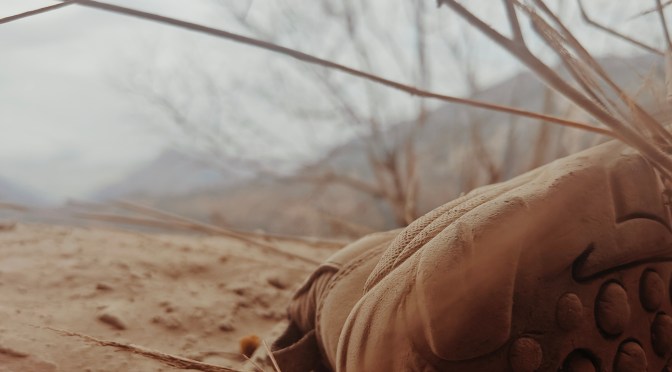
A knit-based shoe washed up on the shores of Huanchaco, Peru (Feb ’22)

If you do know of any picturesque pieces of footwear that have been thrown away on the streets of London, then by all means drop me a message or better yet, send in a shot that you took yourself!