
Tag Archives: korean cinema

Shoes In Film: No Other Choice

I just finished watching Park Chan-Wook’s No Other Choice, and I couldn’t help but notice all the shoe-related themes.
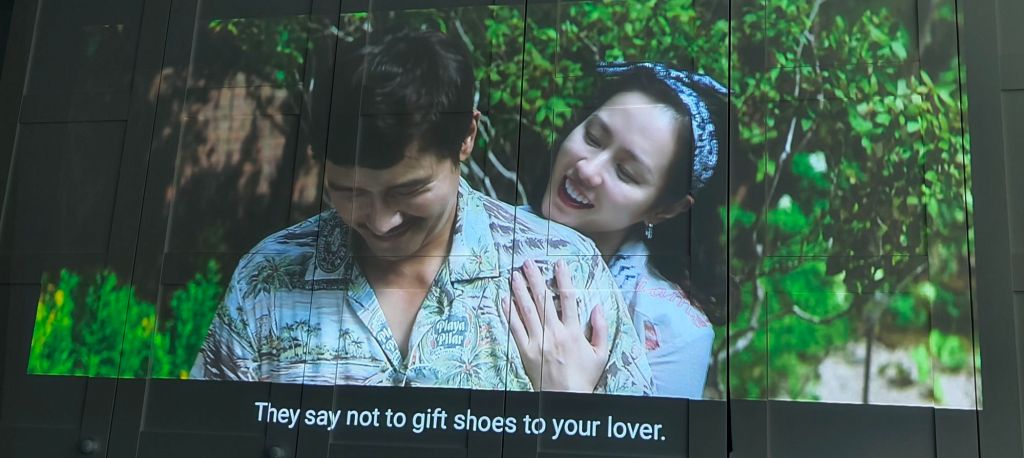
park chan-wook no other choice opening scenes about buying lovers shoes

In the first few minutes, the main character buys his wife a pair of new shoes, to which the wife then says, “They say not to gift shoes to your lover…Cause they might run away in them.” What a line. Also, who is ‘they’? the haters? A conclave of women who have long since fled their clearly failing marriages?
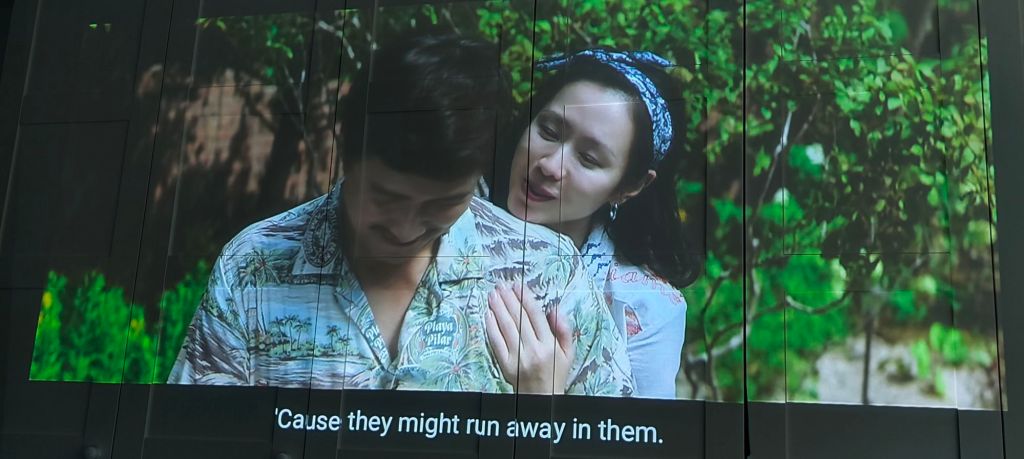
park chan-wook no other choice opening scenes about buying lovers shoes part 2

In all honesty, this does ring true in my experience. I once bought someone a pair of Mid-West Kids x adidas Forums, a pair I also had in my collection. However, the plan didn’t completely revolve around the concept of ‘matchy matchy’, the act of matching one’s footwear to that of one’s partners. Not to be confused with the act of buying two matcha-flavoured drinks, to which the saying may have been reappropriated. If that’s the case, I am willing to get behind a boycott.

Anyway, in the film, the wife gets a hot pair of new heels, so perhaps my mistake was not purchasing a pair sexy enough? Did my shoe choice reveal the possibility of a stale and unexciting end to what was a very fleeting situationship? She did post them on the gram at the time, so my choice couldn’t have been all that bad…right?

In hindsight, I do somewhat agree with the statement. That new shoe feeling can get the better of some, a feeling I would liken to getting a fresh haircut. For a more lady-specific equivalent, I have heard something along the lines of, “tanned, moisturised, a Diet Coke and a plate of chips”, although the plate of chips may be getting confused for a bag of Walkers crisps.

Either way, I am trying to conflate the new-shoe feeling to that of being tanned and sipping a Diet Coke, both of which can sadly cause someone to engage in adultery. If true, I’m impressed Gary Lineker hasn’t got a worse reputation than that of his brother.

That said, when I tend to get new shoes, I either wear them at my desk and write about other shoes or throw them up in the air and take photos of them. I do realise both of those actions put me in a rather unique Ven diagram, and I wholeheartedly accept this.
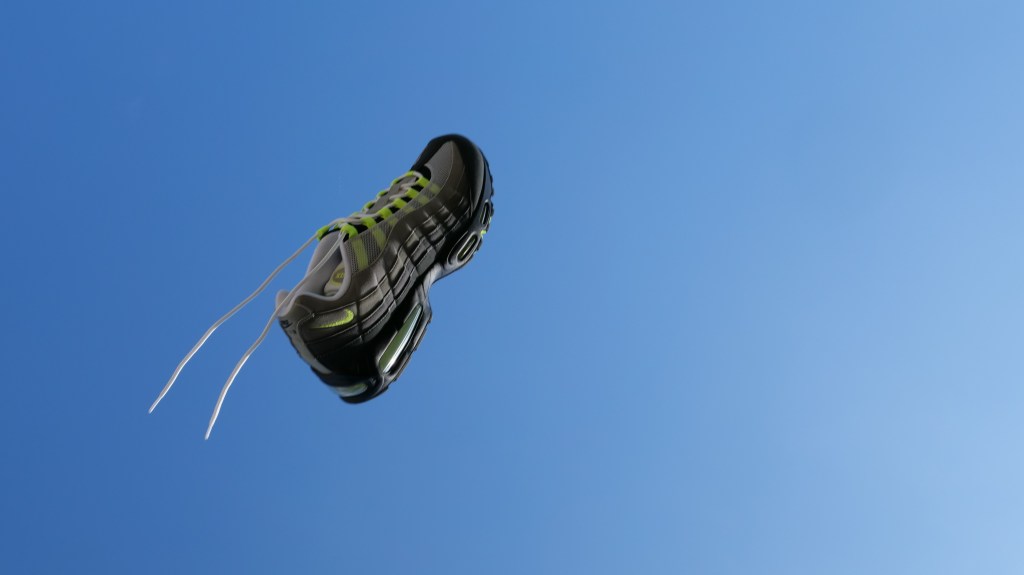
air max 95 neon 2025 being thrown up in air and captured on lumix on sunny day in england

I think I will be increasingly cautious about buying people shoes from now on. Before NOC I had never reflected on that one time I did, perhaps I was too young and naïve, then again, I was living in Manchester at the time. Don’t ask me to explain what that means.
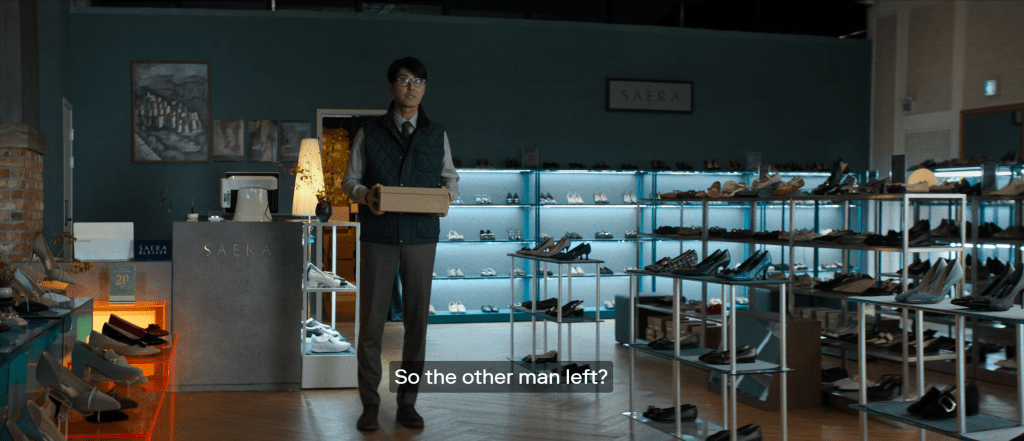
park chan-wook no other choice scene in shoe shop

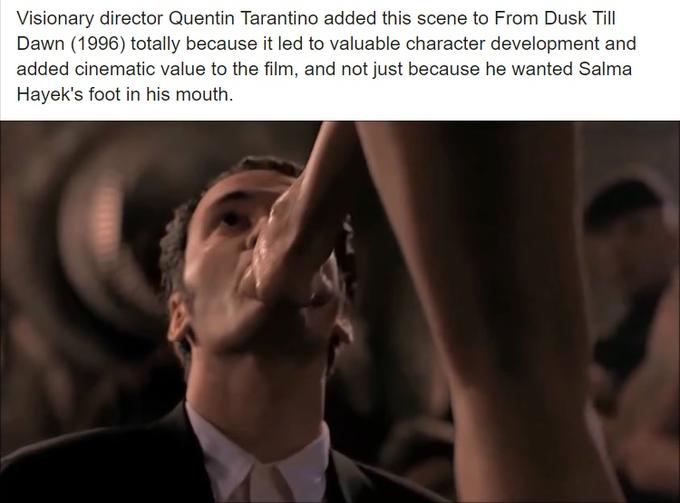
Additionally, between Twin Peaks, Black Mirror – Demon 79, Marty Supreme and now No Other Choice, there seems to be a lot of movies that feature a shoe shop or a shoe shop employee. Either the producers, a high percentage of whom are white men in their mid-40s, have a fondness for feet (shoutout Tarantino), or the humble shoe shop serves as a great metaphor. Think this is a topic worth looking into.
I suppose the point of all this is that be careful about buying shoes for your lovers, partners, or spouse…you don’t know what chain reaction you could set off.

I Wish (2011) – A Film Review

This film took me back to my childhood in a massive way. The carefree attitudes, the swimming lessons, discussing how the leftover crisp packet crumbs are the best bits. Luckily, that’s not all my childhood consisted of, had it been I’d probably be an Olympic-level swimmer with a Walkers deal … which upon reflection doesn’t sound all that bad.

I am currently making more of an effort to watch Japanese and South Korean cinema. To be honest, I’m trying to watch more films in general. My best year for Film was 2017 when I was in my second year of University. I’d often receive and be given recommendations from a friend at film school, discussing genre-bending pieces like Ben Wheatley’s A Field in England thanks to a recommendation from the king of film criticism, Mark Kermode.

Of course with Japanese and Korean cinema, the settings are based in places I know little of, which was part of the charm surrounding I Wish (2011),a film directed by Kore-eda Hirokazu. There was something tangible captured in its 128-minute runtime, I myself felt part of this group of friends, feeling somewhat exhausted after watching them traipse up the long and winding hill to school. My journey was slightly easier, consisting of an hour-long bus journey where the sweltering Indonesian weather was only made bearable by the occasional gust of wind from the bus window.

Swimming was an enjoyable part of twelve-year-old Koichi’s day, a subject he’d discuss over the phone with his brother Ryunosuke in great detail. The film was so brimming with a childhood innocence that even when Koichi’s friend revealed his recently dead pet dog was in his backpack, it was endearing and not completely horrifying. There’s obviously more context, yet it proves how focused Hirokazu’s direction was throughout the process, flipping this horror-esque trope on its head. I was totally invested in this journey, eager to watch these brothers reunite amidst the complications of their parent’s divorce.

As a backdrop, Japan plays a huge role in the film, with its many cultural colloquialisms seeping onto the screen. A huge volcano would linger in the background as Koichi would walk to school, its towering presence over Kagoshima a factor that the residents would simply have to put up with. One can only imagine how terrifying that would be as a child, a cultural separation that the director was tasked with communicating to the Western audience.

One of the mothers works behind a bar, serving drinks to elderly gentlemen while reflecting on her failed dream of becoming an actor. Consequently, she projects this onto her daughter, doubting her drive and ability to shine against the blinding lights of Tokyo. As with many of the character arcs, Hirokazu amends this by giving her a real moment in the spotlight, when the consequences are high and the group of friends trailing behind need her to pull through. Even as a child, these little wins go on to have big effects.

There was another scene in which the boys are trying to raise money for what appears to be a cross-country train journey, yet could easily have been a normal commute for your city worker. Events are exaggerated in our youth and the director manages to translate this successfully through his writing. Each of the toys sells for 5000 Yen, with the game shop worker observing them with his intricate figurine-based knowledge. This reminded me of many trades that took place in my childhood, and one in particular which involved me swapping a set of Pokémon cards for a three-headed Japanese dragon. I’d later go on to find out that the dragon was called Ghidorah, a monster of cultural significance in Japanese lore and frequently referred to by the late rapper, MF DOOM. Even the snacks they would eat and drink would take me back to the days of sipping Pocari Sweat in the humidity of the Indonesian summer.

I enjoyed this film a lot. With buckets of heart and spoonful’s of charm, this should definitely be a watch for anyone who has lost their inner child along the way. If you’ve got MUBI then I highly recommend giving it a watch!

Park Chan-wook – Time means nothing

Last night I watched Park Chan-wook’s The Handmaiden (2016), a film packed with the Director’s narrative style. My thirst (pun intended) for Korean storytelling still lingered, remembering I’d seen his short film crop up on MUBI, I swiftly hit play. Park Chan-wook’s short film, titled Judgement (1999), was based on the 1995 collapse of the Sampoong Department store, a catastrophe that saw many people swoop in to claim Government pay-outs. The film was perfectly named and explored the theme of judgment from almost every angle imaginable. The Morgue worker’s character was so fully developed within the 26-minute run time, proving the director does not need a 2-hour-plus in order to tell a story. Even characters who had only been referred to through memories seemed to roam the physical space of the morgue’s back room, a further implication of the brilliant script. As the cameramen are shoved out of the room, Chan-wook shows us the behind-the-scenes results of the Sampoong Department store, where family secrets are no longer buried. Judgement is more than worth your time and goes to show exactly how much the short film medium can achieve.

Luckily for you, it’s available to watch on YouTube, so if you’ve got a spare 30 minutes or need some thought-provoking material, this should be on your list.